If You Stall When Parking Do You Need to Turn the Car on Again
Interior - Front end
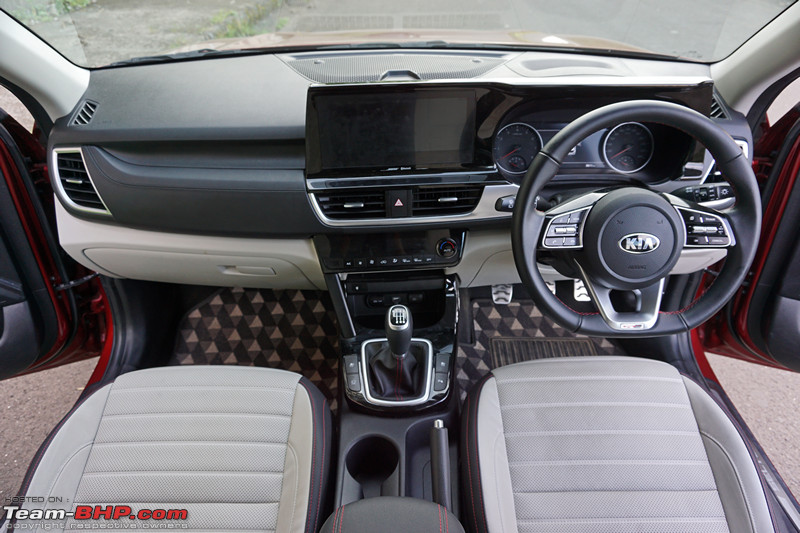
The front doors of the Seltos open and close in a triple-phase action. They accept decent feel and aren't light as in some other Asian cars. The doors open broad enough & the roof is high. And so, occupants will non accept whatever trouble while getting in or out. On the inside, the Seltos has very good legroom and headroom. Even taller occupants will find it comfortable.
The forepart windshield is big. Though the roofline slopes downwardly, the rear windows are decently sized and overall, enough calorie-free is inbound the cabin. The interior appears similar in size to the Hyundai Creta's. They have a dual-tone beige & black theme. An all-black theme is also available, though not on the height (GTX+, HTX and HTX+) variants.
The styling of the dashboard is contemporary. It is black on the acme and beige beneath, with silver and piano black inserts. The instrument cluster and the infotainment head-unit are integrated into one large display that sticks out from the dashboard. It has a piano black finish. The carpets are blackness, while the doorpads, seats and floormats are biscuit + blackness. This is not very clever, equally they are all likely to get soiled easily. However, it does make the interior look dainty and blusterous. The roofliner is whitish-grey.
The plastics on the dashboard are all hard. That said, the quality of the plastics is certainly the all-time in the segment. Every part is well-finished and there are no rough edges anywhere. A leatherette (bogus leather) insert is present on the passenger side of the dashboard. The seats get leatherette upholstery and there is some leather applied on the door armrests, fundamental armrest, also as the gear knob and steering wheel. Ergonomically, the cabin is well laid out and all controls are piece of cake to find / reach. Y'all'll detect your perfect driving position inside minutes.
The experience, quality and cease of the buttons is very skillful and they experience like they are built to final.
Kia has loaded the interior with features such equally auto headlamps, auto wipers, auto-dimming IRVM, electrically adjustable and ventilated front seats, blind spot monitor, caput-upwards display, a 10.25-inch touchscreen head-unit with telematics (UVO), 8-speaker Bose audio organization, ambient lighting, electric sunroof, wireless mobile charging and an air purifier. Even so, some features such every bit illuminated power window switches and illumination / cooling for the glovebox are conspicuous by their absence.
Blackness & biscuit dashboard is logically laid out. The entire cabin is practical, convenient and equipped with likeable features. Part quality & ergonomics are spot on too:
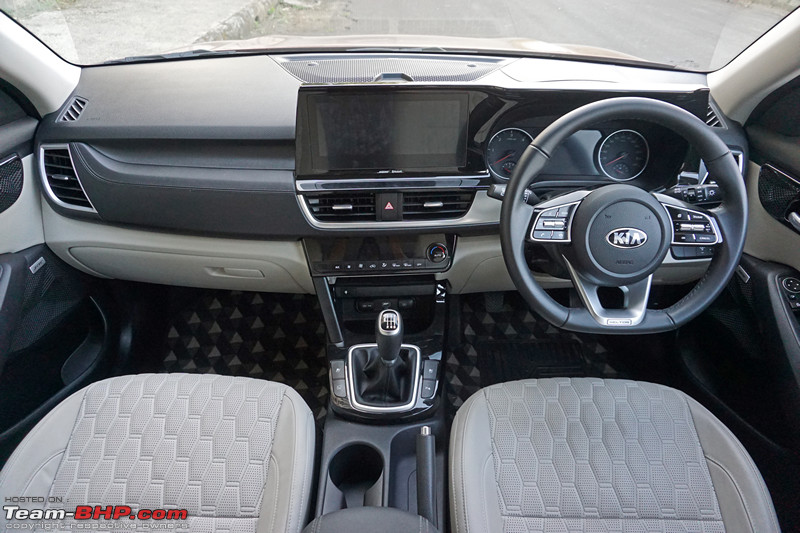
Dashboard is well-screwed together and nicely finished. I can't find any rough edges anywhere:
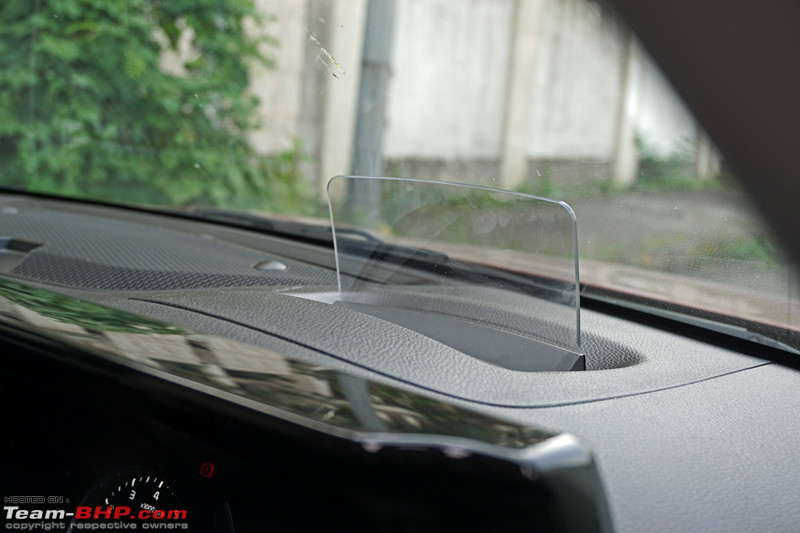
Top of the dashboard (behind the instrument cluster) houses the retractable head-upwards brandish in the GTX and GTX+ variants:
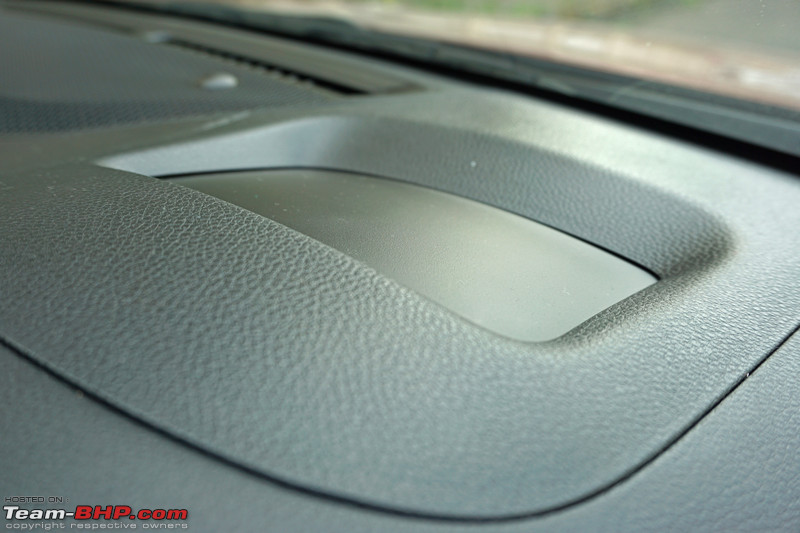
eight" head-up display pops up from under the cowl. It's not the most elegant HUD solution & feels rather after-market'ish, but is still unique in this form of machine. HUD worked well for our 5'10" height & we didn't need to take our optics off the road. Won't suit everyone though (dependent on your seating position), despite its available adjustments:
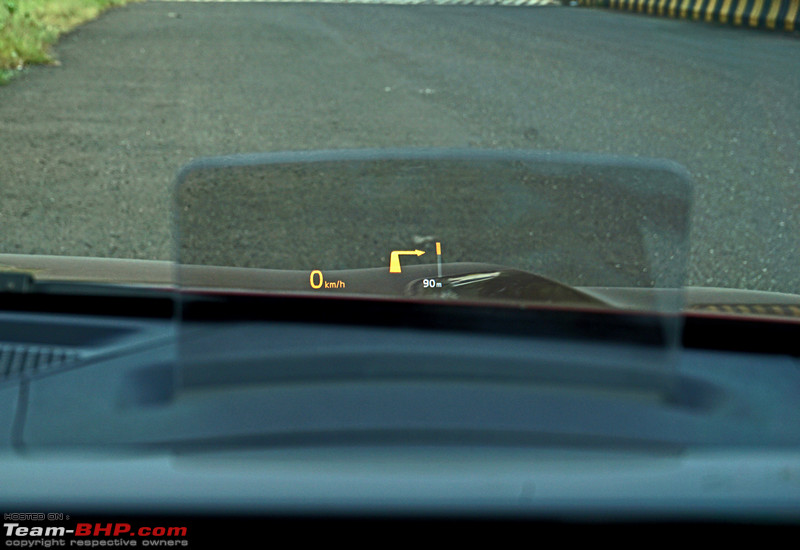
Speed and navigation directions are displayed on the head-up brandish:
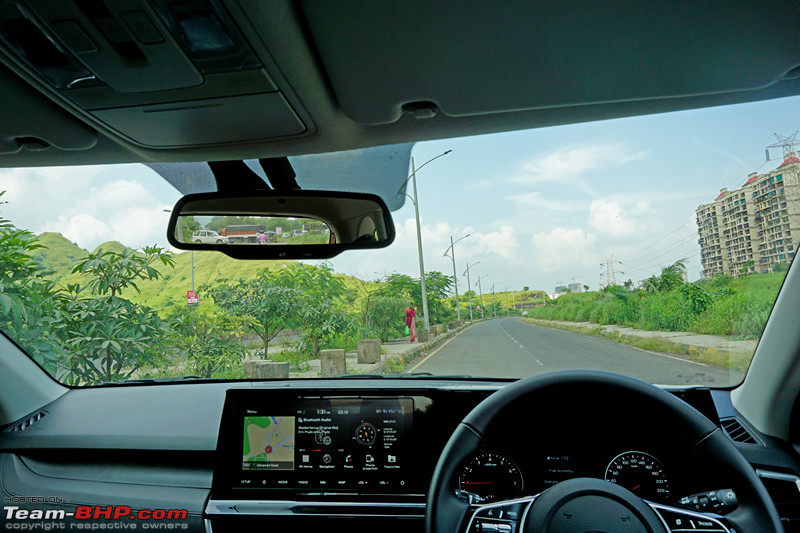
Windscreen is large and the seating position is a little high up. We could see the muscular humps of the bonnet in our 5'10" driving position. Still, we are a flake apprehensive near the frontal visibility with the uniquely designed instrument cluster that sticks upwards from the dashboard. It's okay for average sized users, but shorter drivers could accept challenges. This makes the caput-up display useless for curt drivers, even with the driver'south seat at the highest position:
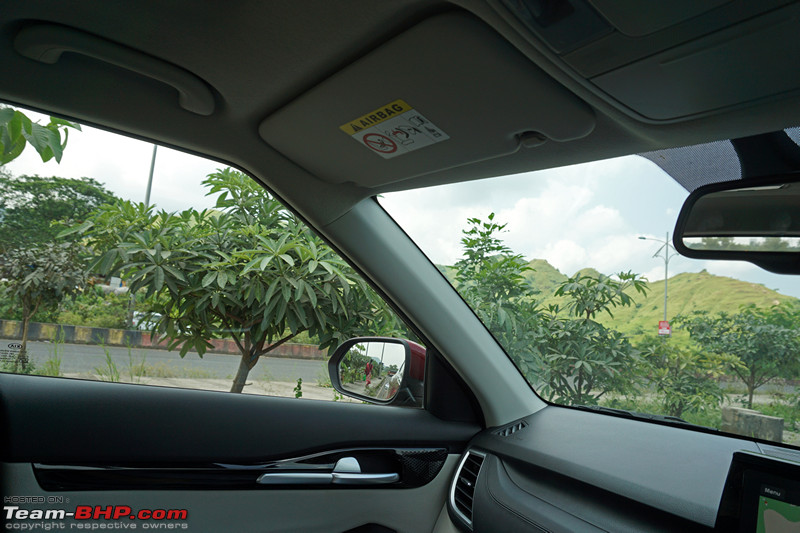
A-pillars aren't excessively thick and do not cause big blind spots. Lateral view and all-circular visibility are satisfactory:
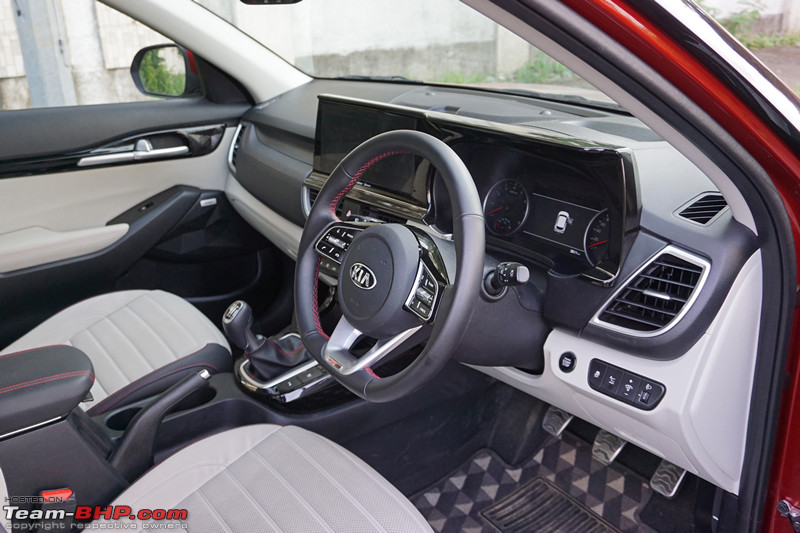
GT Line gets a sweeeeet iii-spoke, leather-wrapped steering wheel with crimson stitching, piano black + silver inserts and thumb contours. Information technology looks very premium, is the perfect size and has simply the correct thickness. Flat lesser steering feels great to hold and offers good grip. The steering-mounted controls are finished in blackness & have well-sized buttons, making them easy to operate. The toggle switches are finished in silver. While the steering is great when it comes to the looks and feel, ane gets the impression that there are too many buttons on the cycle. The hornpad isn't piece of cake to reach for those with shorter thumbs, but information technology is light to printing. The horn itself is a twin current of air-tone blazon with a premium European audio:
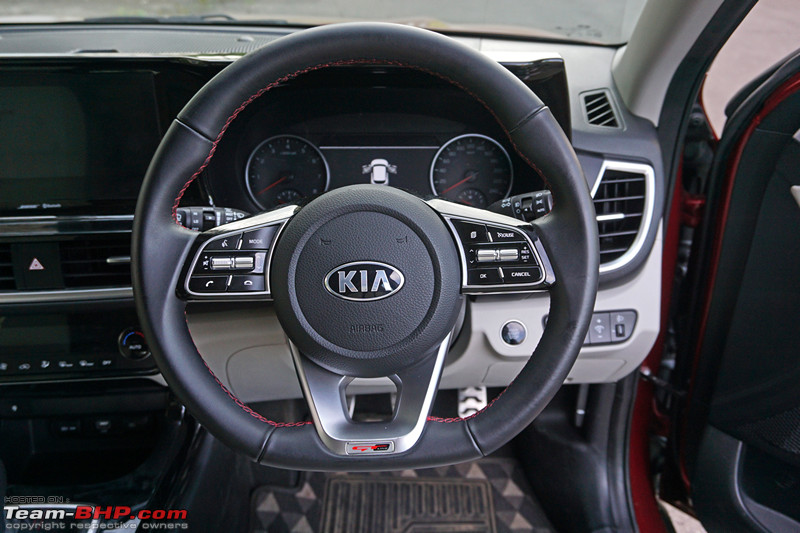
Buttons for the infotainment system, telephony and voice commands are placed on the left spoke. Mute function (very useful) is by pressing the volume switch inward. Pressing the mute button does not pause the song that'due south playing. Like we accept seen in some new cars, to get to the next rail, you have to push the track button down (opposite of what is usually the example). Looks like a new tendency being adopted by manufacturers.
Buttons for operating the MID and cruise control are placed on the correct spoke:
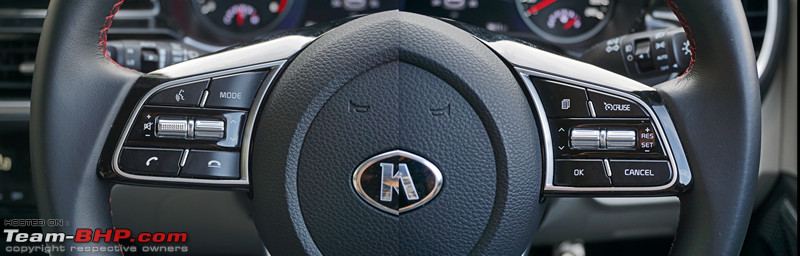
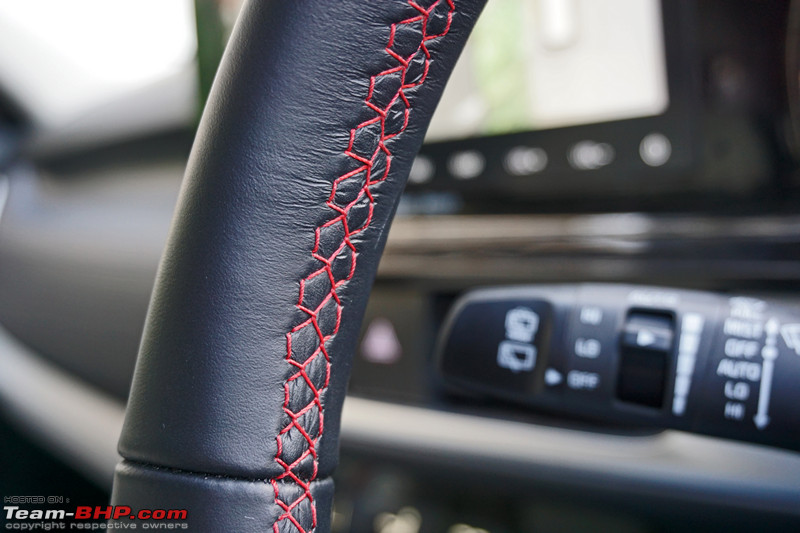
Zooming in to bear witness you the red contrast stitching on the steering:
GT Line badge sits at the base of operations of the silver insert on the steering:

Tech Line gets the same steering wheel as the GT Line, but without the contrast stitching:
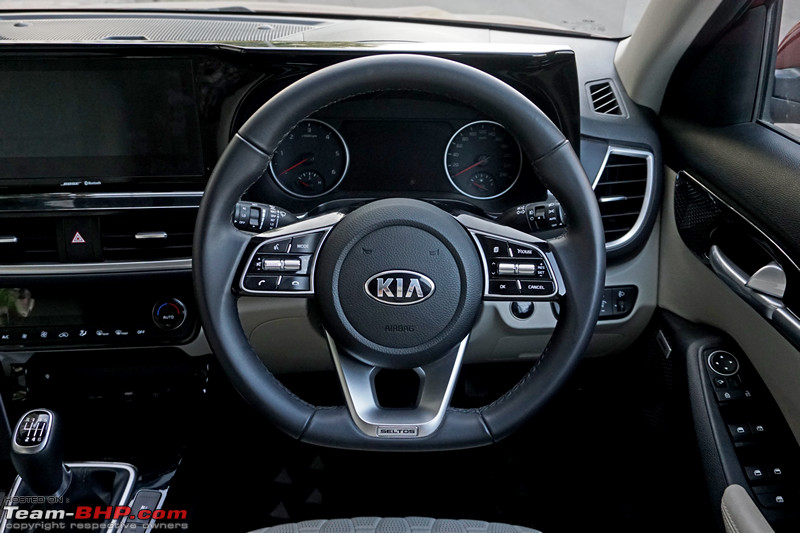
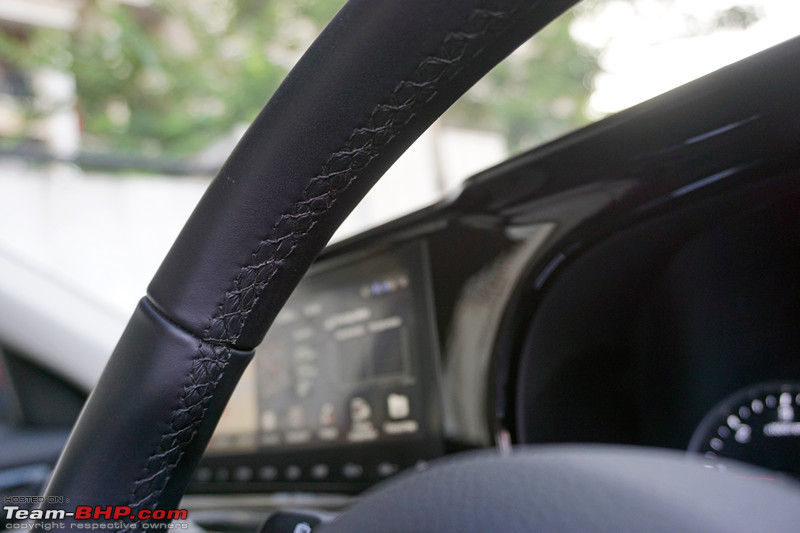
A closer look at the
perfect stitching on the Tech Line's steering:
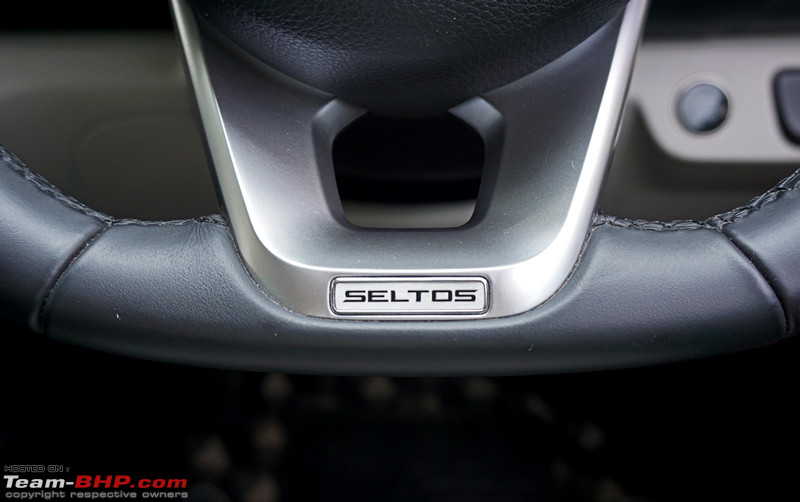
It comes with a Seltos badge instead:
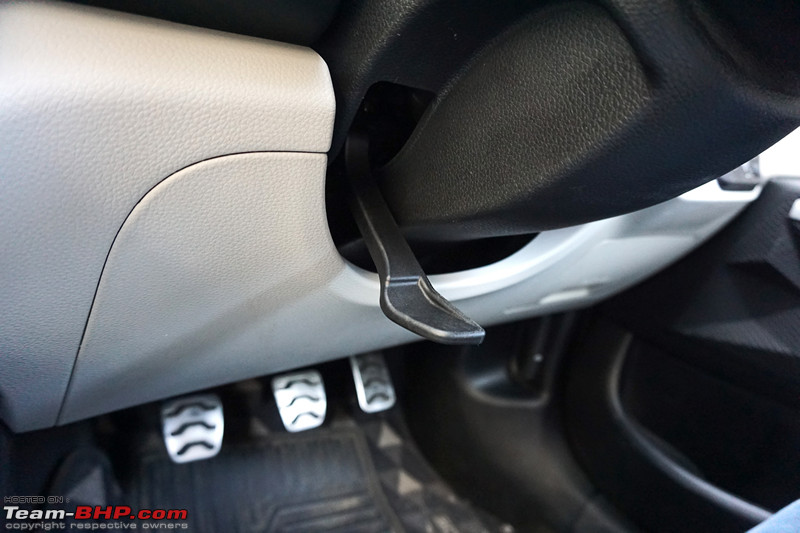
The steering can be adapted for height & reach, both:
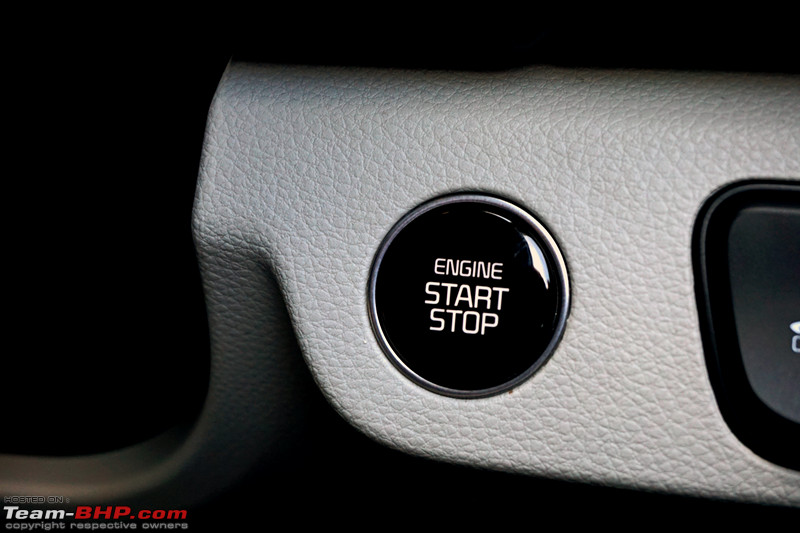
Glossy black engine kickoff button with a silvery ring around it. Looks classy:
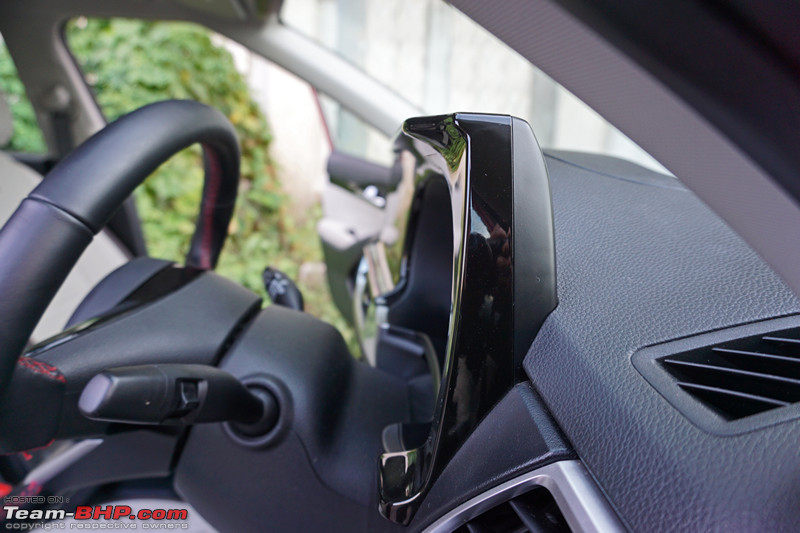
A look at how the instrument cluster unconventionally sticks out from the dashboard. We aren't fans of this new tendency:
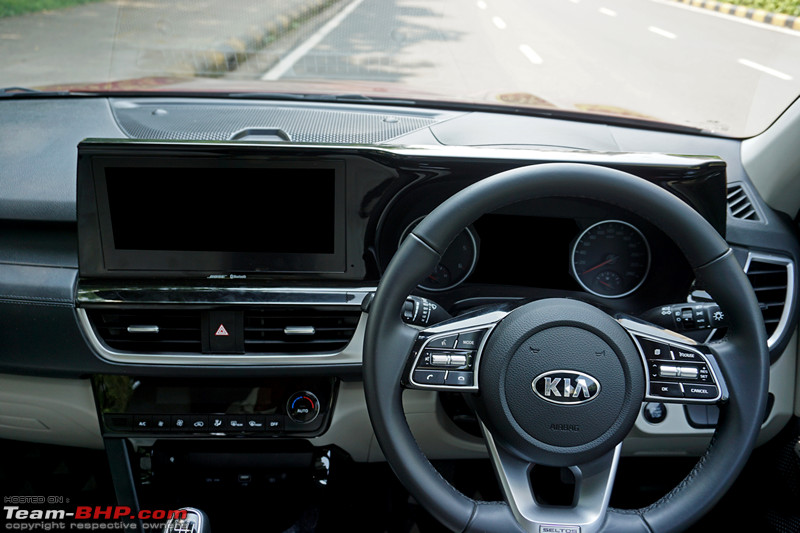
10.25-inch touchscreen head-unit of measurement uniquely looks like an extension of the instrument cluster. Nosotros offset saw this kind of organization in the W222 S-Grade:
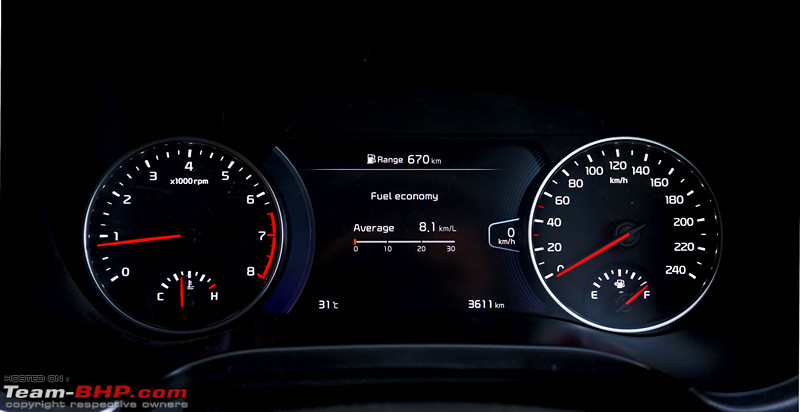
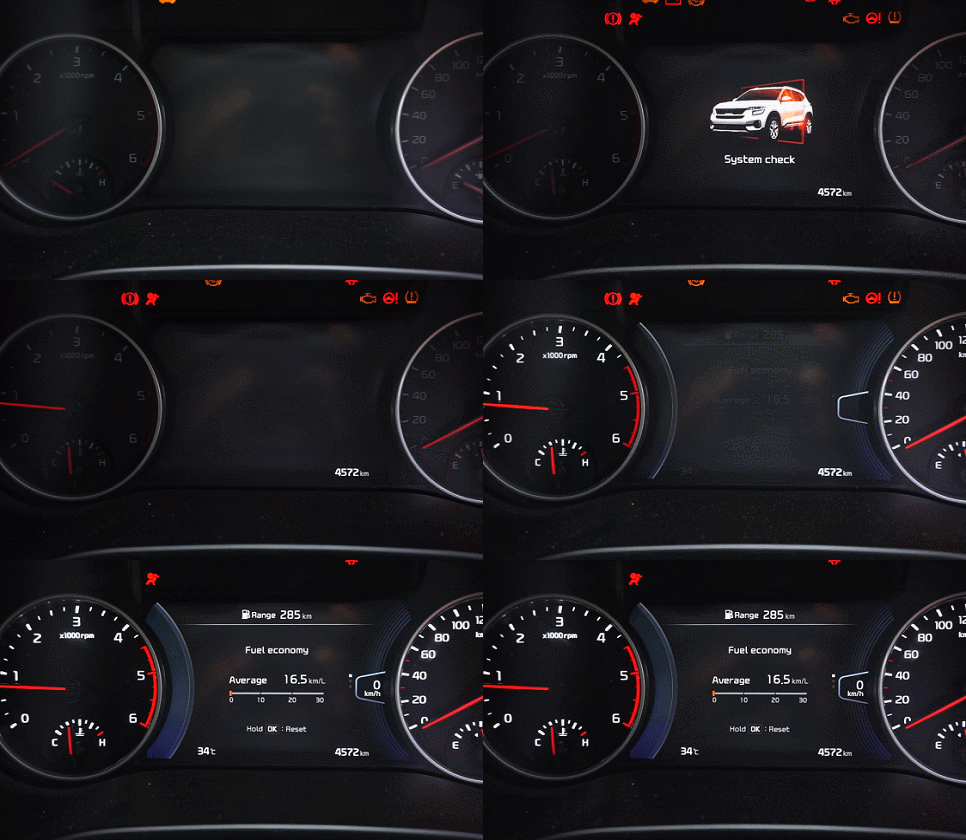
Musical instrument cluster is easy to read. Tachometer on the left & speedometer on the right (just the way we like it). Counterpart temperature & fuel gauges also, with a vii" colour MID in between. Meters are backlit in white and take red needles. While the tachometer of the 1.4L turbocharged petrol is marked till eight,000 rpm...
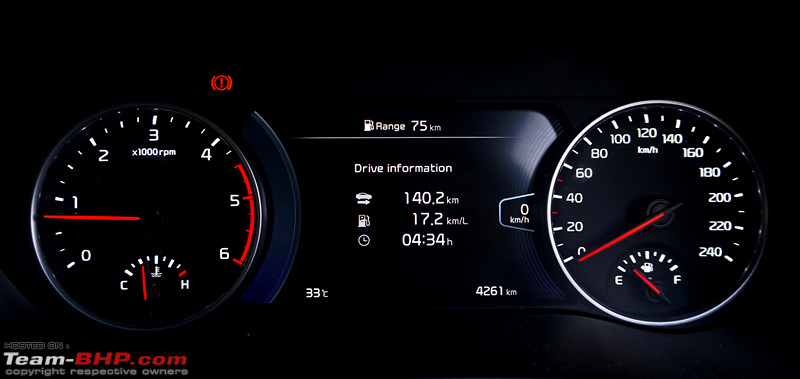
...the one of the diesel fuel is marked till 6,000. Both the engines are free-revving in nature:
A organization check is performed every time the car is started. Overnice graphics! Likewise, the odometer is shown every time the door is opened:
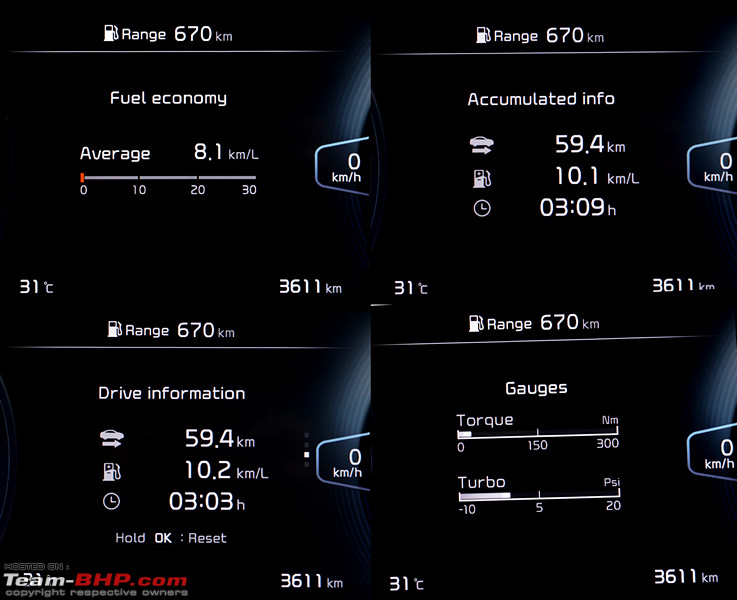
The MID shows average and instant fuel consumption, distance-to-empty counter, a single trip meter, digital speedometer & exterior temperature reading. The trip meter shows the altitude travelled, average consumption and time taken. The MID also displays turbo & torque meters which show yous how much power & torque are beingness used. Very gimmicky. The digital speedometer is a glutinous & remains on, no thing what y'all are viewing in the MID:
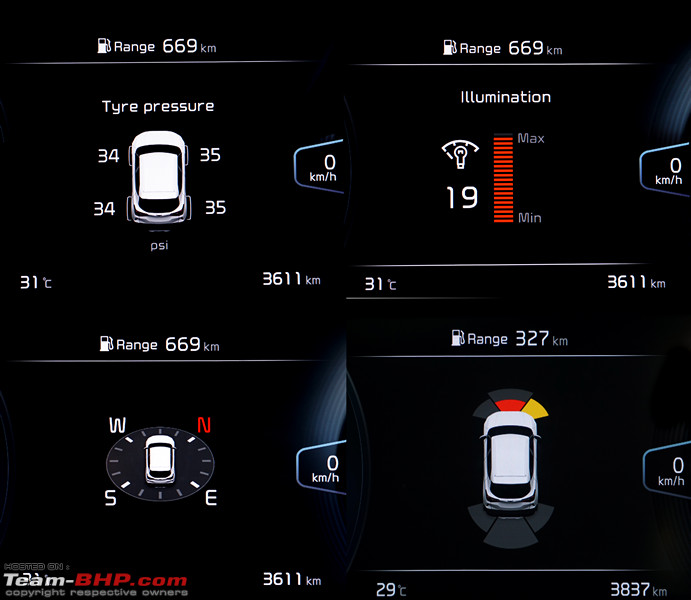
Other readouts include a TPMS and compass (pointless on a FWD motorcar). The illumination of the musical instrument cluster has twenty levels of aligning. MID has a parking sensor brandish as well:
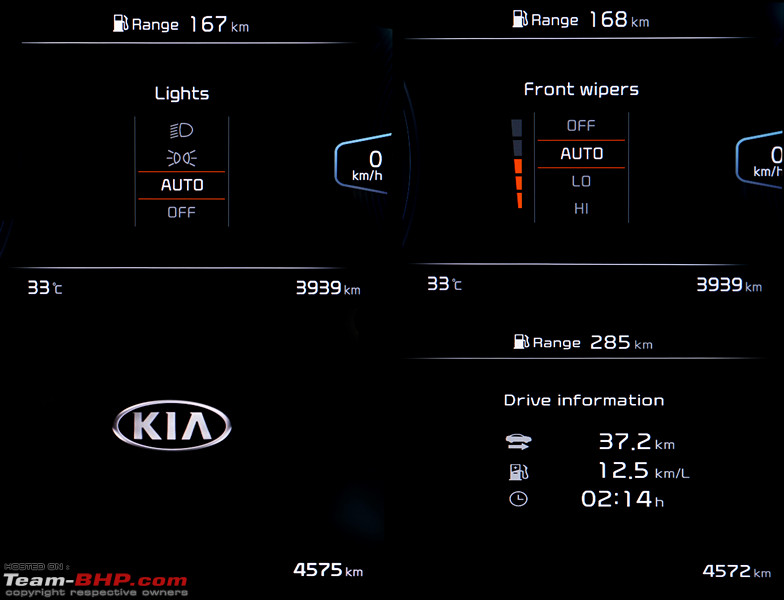
The MID also displays the position of the lights and wipers (as you adjust their respective stalks). Quite cool! These readouts announced for a few seconds whenever the positions are changed. The MID farther shows a summary of the drive when you switch the motorcar off:
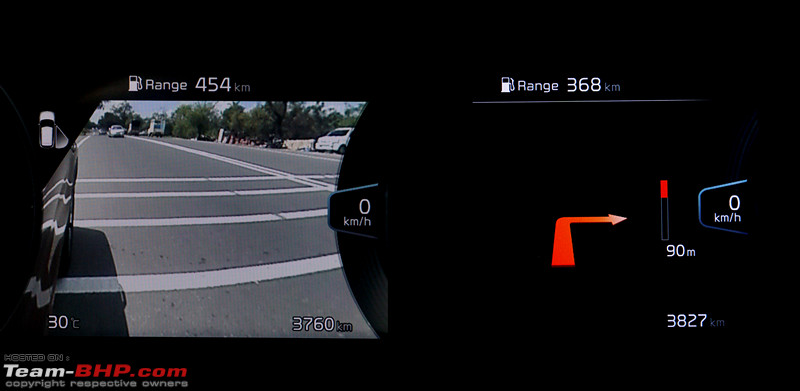
MID turns into a 'Blind View Monitor' when whatsoever of the indicators is turned on. The ORVM camera activates & this brandish shows you what's on the side. Useful while parking too (especially left camera to sentry the kerb). Navigation directions are too displayed on the MID:
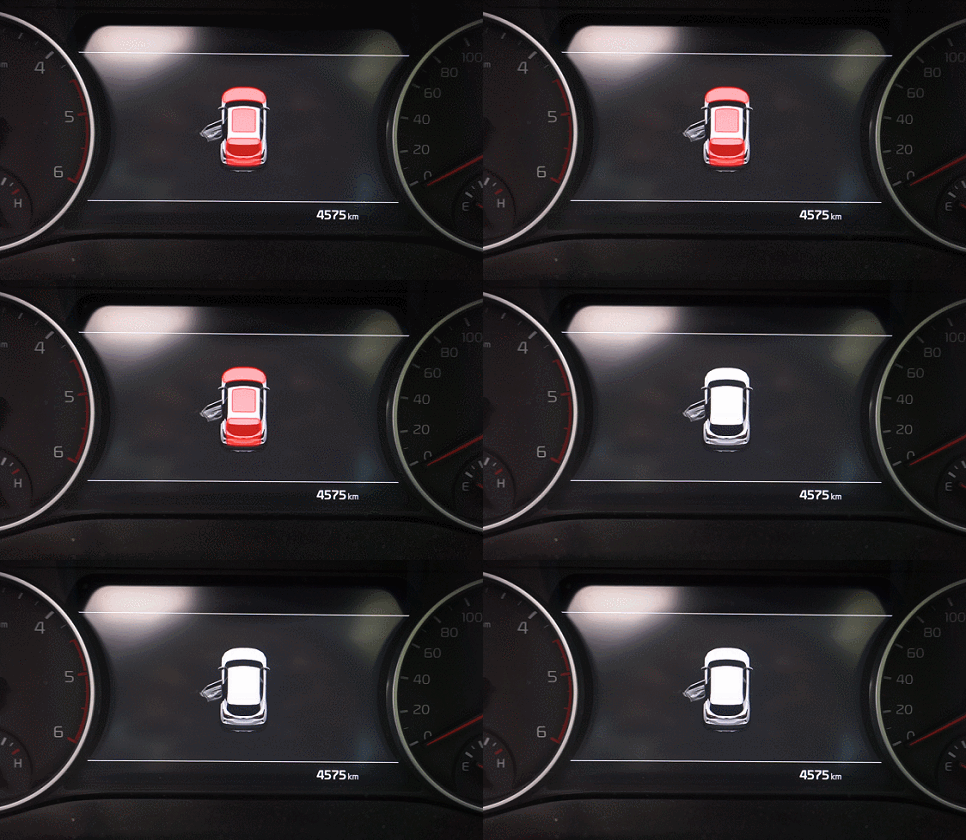
MID displays the specific door that is open. Information technology covers the bonnet & tailgate too. The system sensibly warns you if the sunroof is open, simply when the engine is switched off:
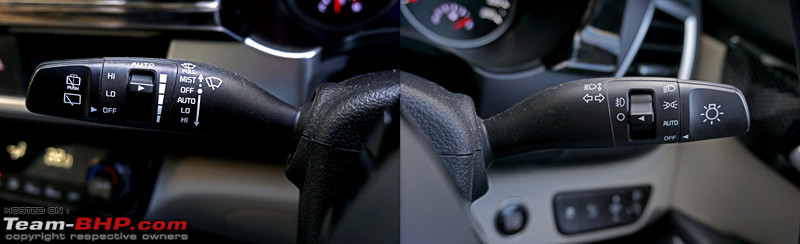
Stalks exude quality. Wiper and light stalks are shared with some Hyundai cars. Quality is excellent and the operation soft. Automatic wipers have been provided and there are five levels of settings for sensitivity. You do get auto headlamps as well. Foglamp switch is nicely integrated on the RHS stalk. Lane modify indicator is standard on all variants:
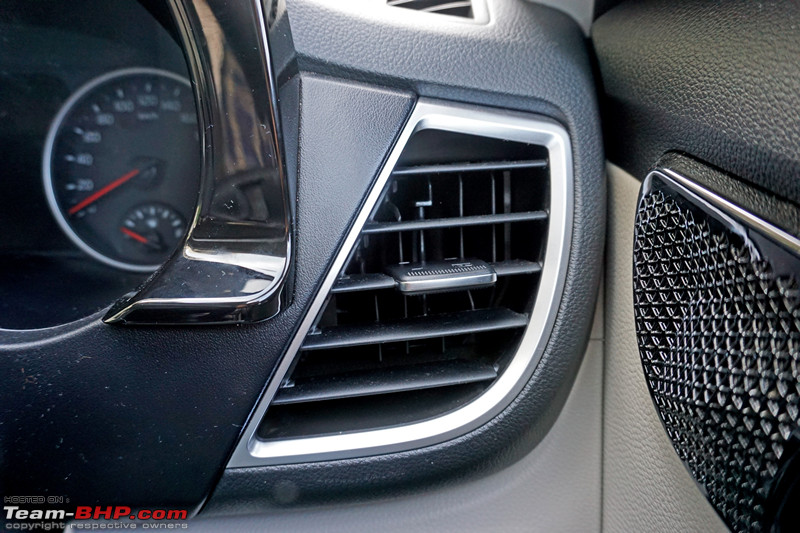
Air-con vents are symmetrical and go a thick silvery edge. Air catamenia tin exist close past moving the direction controller to the farthermost left or extreme right for the right and left vents respectively. However, fifty-fifty with the vents in full shut position, some air keeps flowing out:
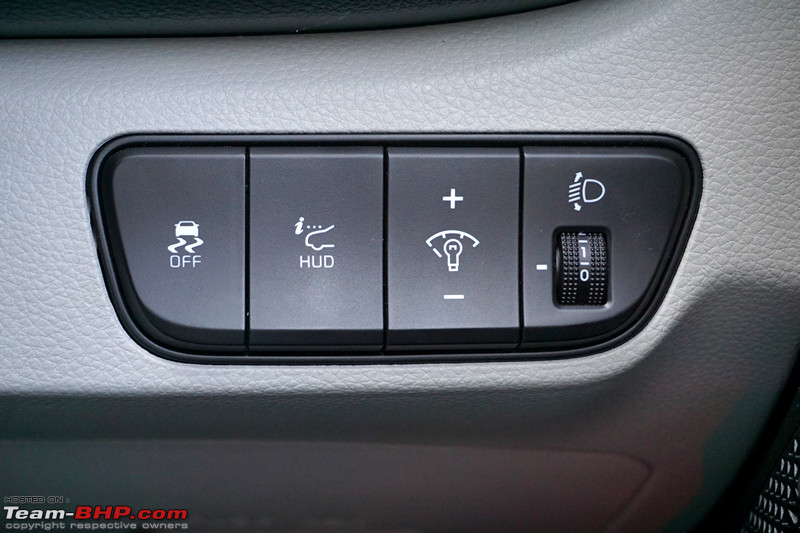
Switches for popping out the head-upward display, dash illumination and headlamp level adjustments are located below. The traction command off button is as well located hither (don't ever apply information technology unless starting off on slippery surfaces similar slush & snow):
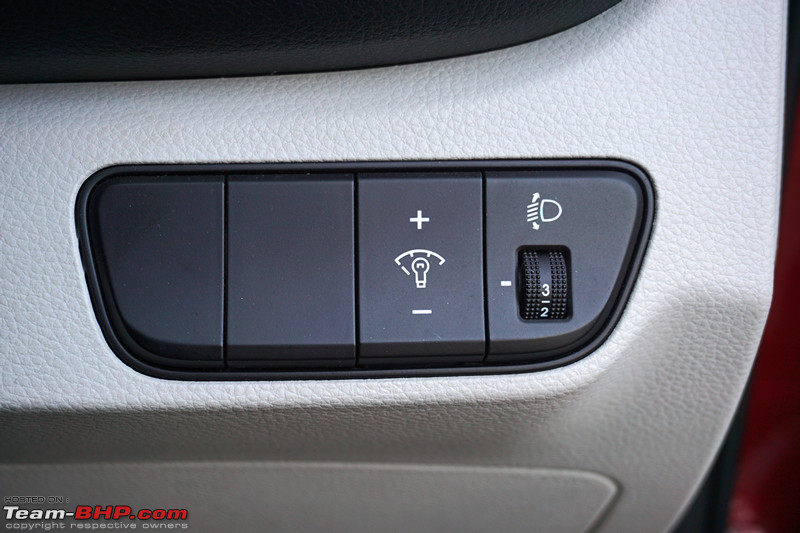
Tech Line does not get traction control or a head-up display. Hence, switches for those are replaced past blanks, which requite a feeling that something's missing:
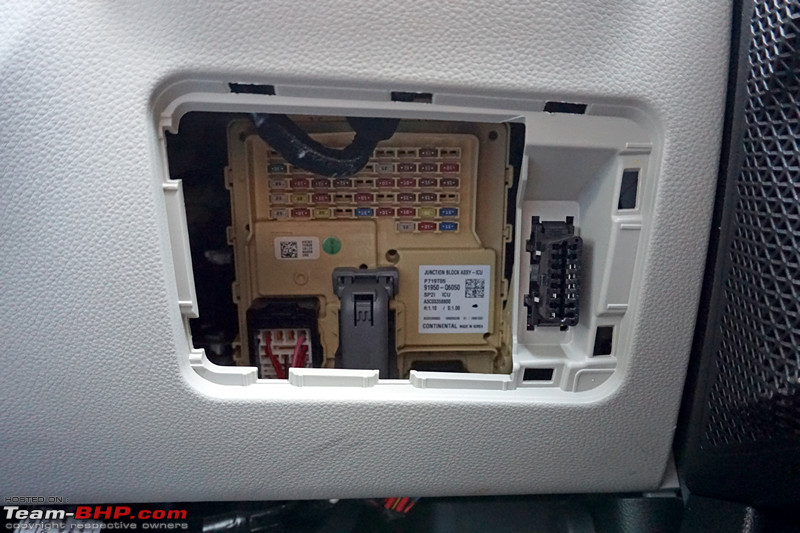
Black OBD port is located to the correct of the fusebox:
Thin, yet sturdy bonnet release lever is located below the dash:
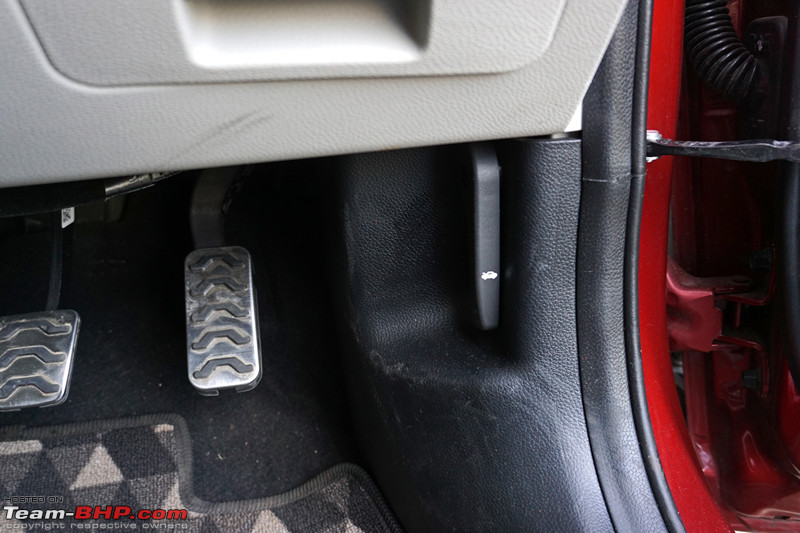
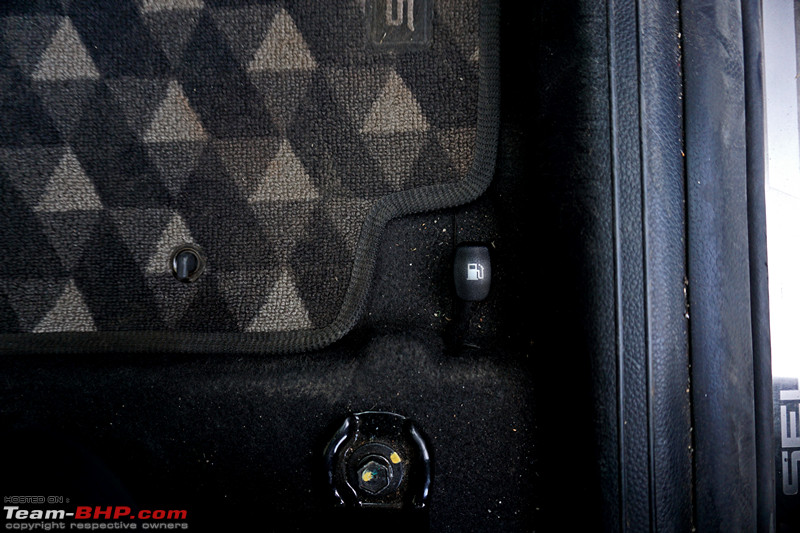
Fuel flap release is placed conventionally on the floor:
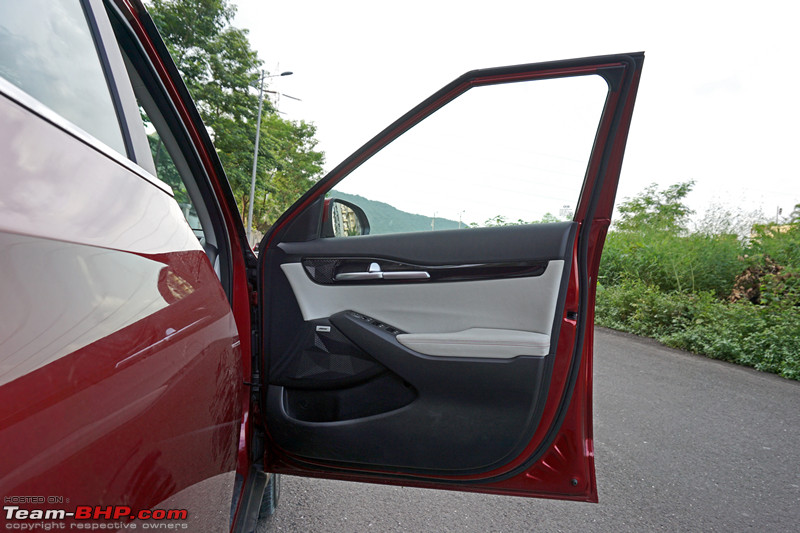
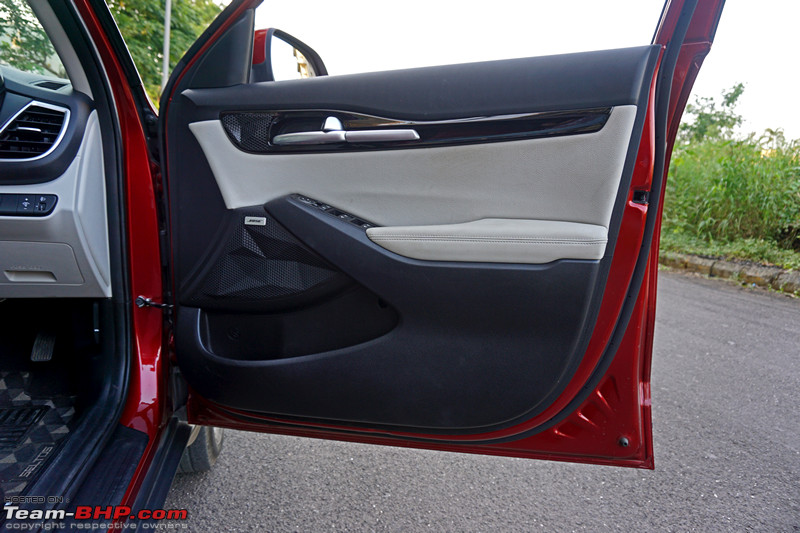
Like the dashboard, the doorpads become a beige & black colour theme. The beige area is in the middle. Information technology is sure to get soiled if the user's easily are not clean. Tweeters & front speakers are housed in the doorpad:
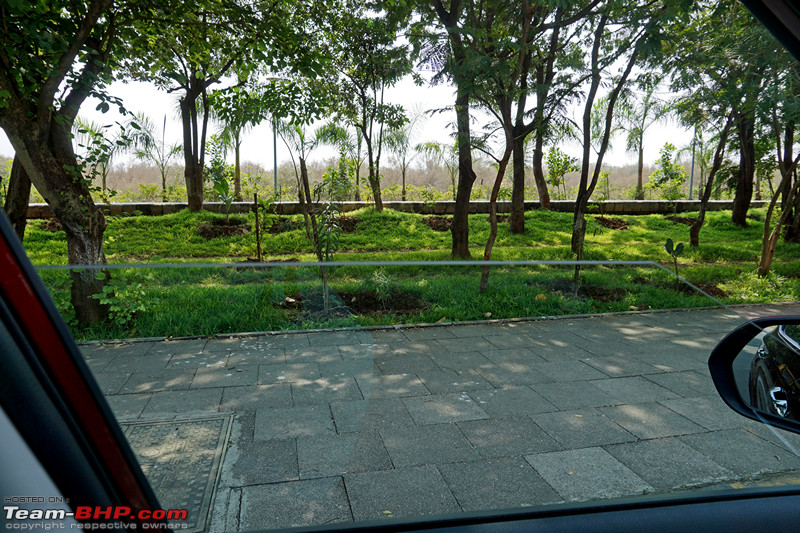
HTX+, GTX and GTX+ variants get UV-cut solar drinking glass on the front end windshield and windows, which is claimed to stop ultraviolet rays from inbound the cabin. God bless these solutions in our sunfilm-less era:
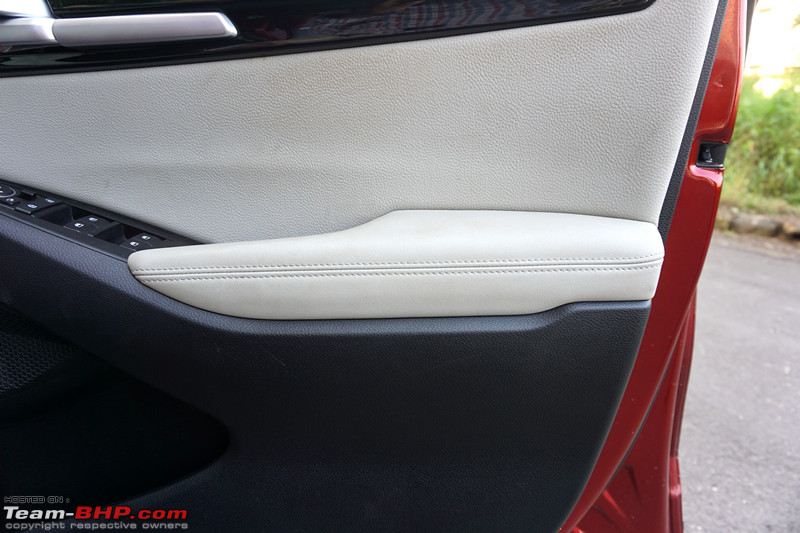
Shiny piano black insert houses the tweeters and silver door handles. The handles feel sturdy & long-lasting. While the plastics are all hard, the armrest is wrapped in leather. Red stitching in the GT Line looks cool. "Bose" badge carries weight in India. User-friendly touch = Even if the driver'southward door is locked, just pull on the lever and the door opens (no demand to use the unlock knob first). It'south only on the driver'south door & that's a good thing:
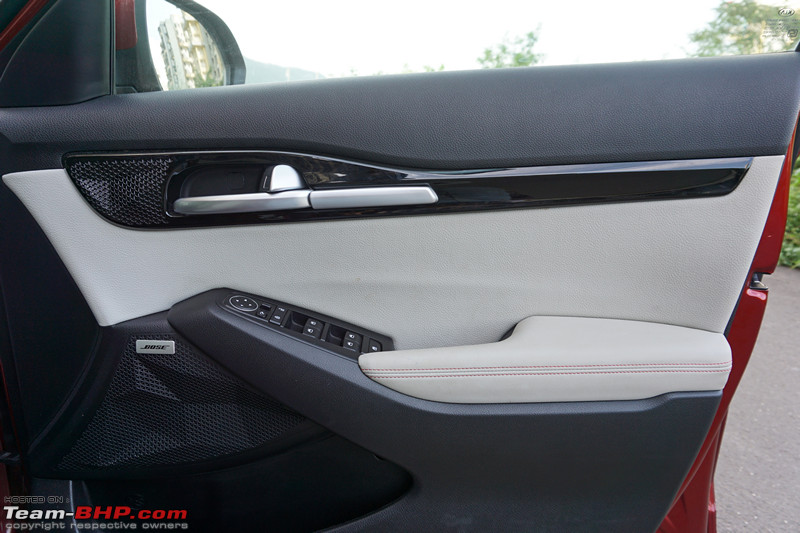
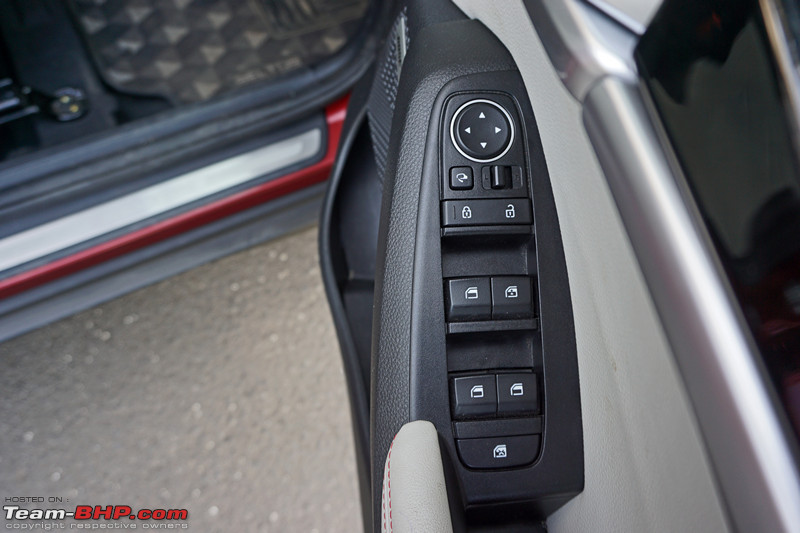
Console houses the usual ready of buttons. Only the driver's window gets ane-touch up/down and anti-pinch functionality, and simply the commuter's window button is backlit. This car is and then loaded, but something equally practical and convenient every bit illuminated switches are missing!! Had to look for the lock / unlock switch at dark, which sucks. Door mirrors are electrically foldable. ORVM adjuster selector switch is weird. One of the 2 mirrors is e'er selected - in that location is no heart / expressionless position. So, if by chance, you press the adjuster, one of the mirrors will modify its angle. ORVMs can be closed electrically even after the engine is switched off. The opening & closing deportment are damn silent. Nosotros respect such finer detailing:
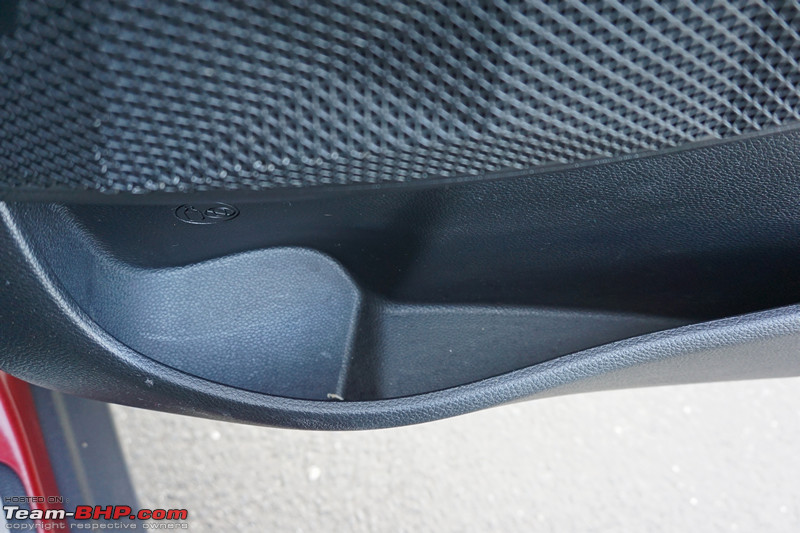
Doorpad tin hold a 1-liter bottle, and other small items:
A peek at the doorpad of the Tech Line (HTX+) variant:
No contrast stitching here:
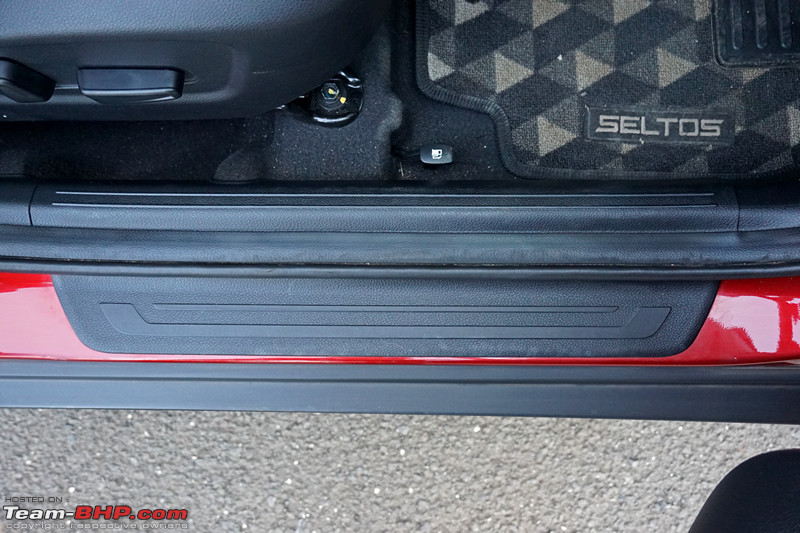
Running lath is not broad, making ingress / egress easier. GT Line gets 'Seltos' branded aluminium scuff plates while...
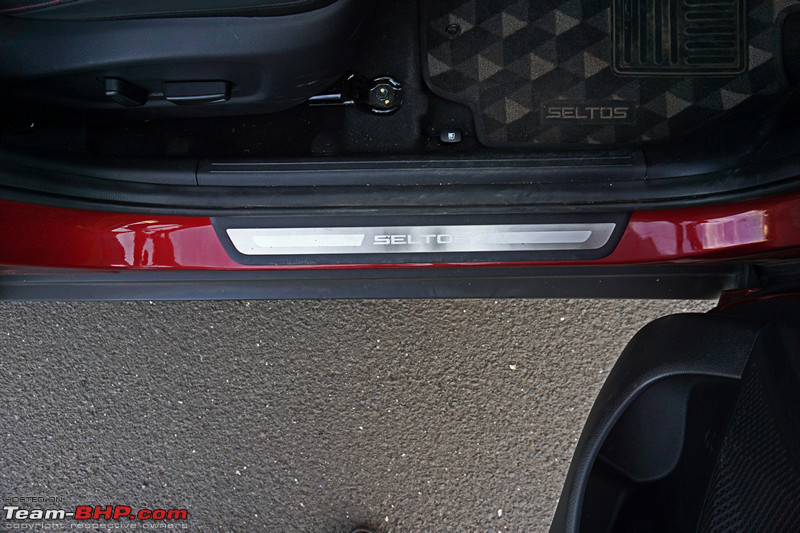
...Tech Line gets a simpler black-plastic one:
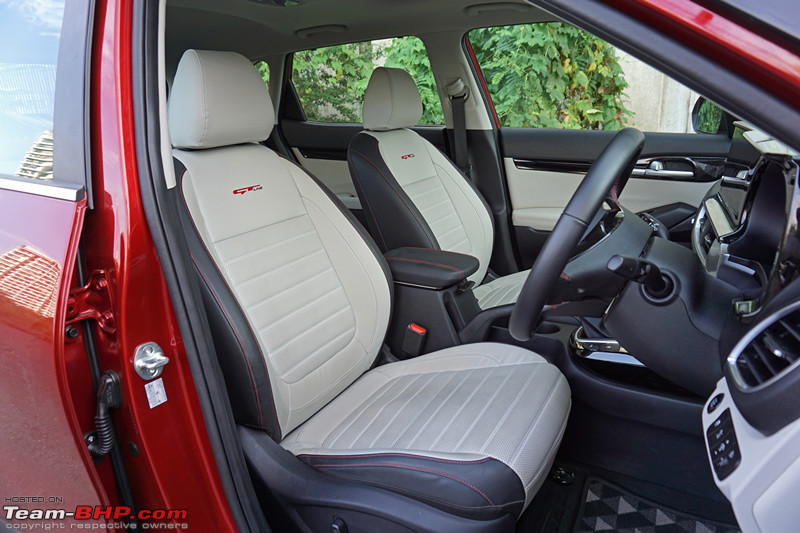
Blackness & biscuit front end seats of the GT Line and HTX / GTX+ variants of the Tech Line are draped in leatherette upholstery. This white'ish colour looks premium, only gets muddy fashion too hands. Under-thigh & back support are satisfactory. Importantly, the seats come with a cooling function which prevents the users backs from perspiring. Such a boon in hot Indian summers. Overall, nosotros found that the driver'due south seat offers satisfactory support, even on long drives. On the downside, those with a heavy build might find them a size too small-scale:
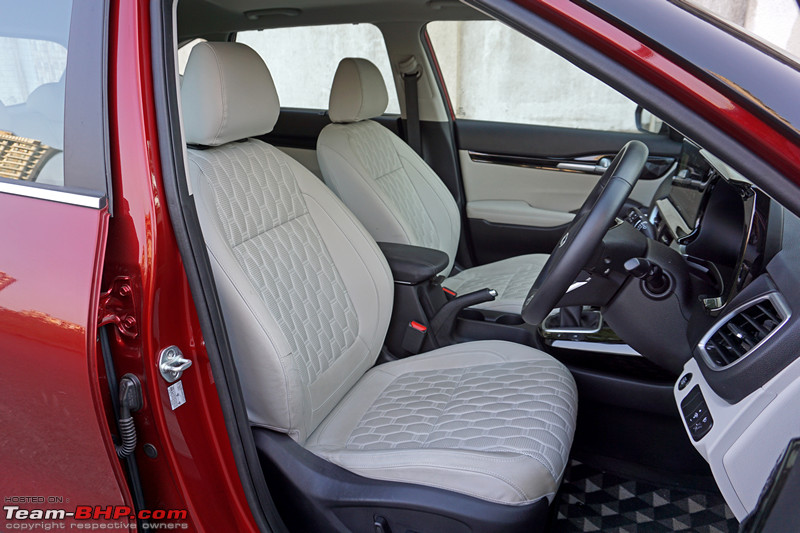
A look at the leatherette upholstered seats of the HTX+ variant. Prissy pattern!
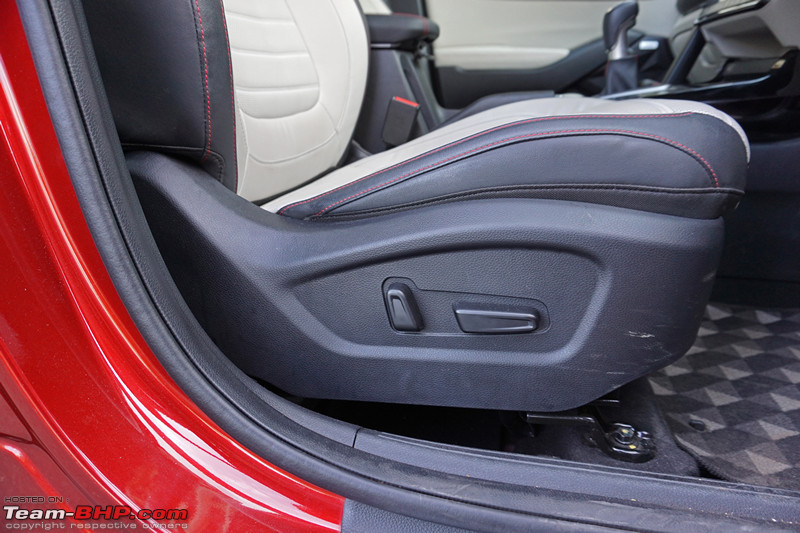
Driver'southward seat is 8-way electrically adjustable. Lumbar adjustment is not provided. These switches feel sturdy & durable. Finding a comfortable driving position is super like shooting fish in a barrel:
Fore & aft travel range is plenty to accommodate alpine & short drivers alike:
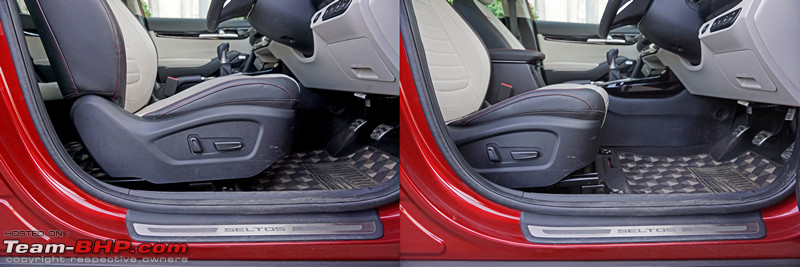
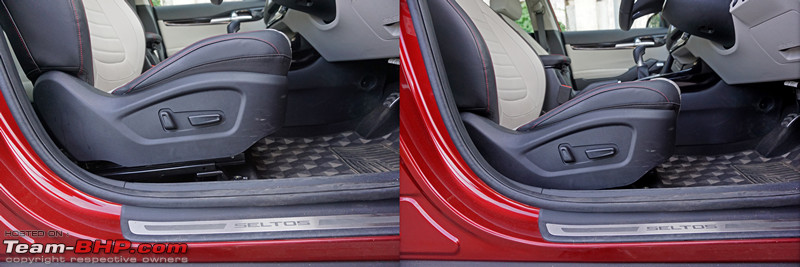
Height adjustment range is healthy besides. Short or tall, no one will complain:
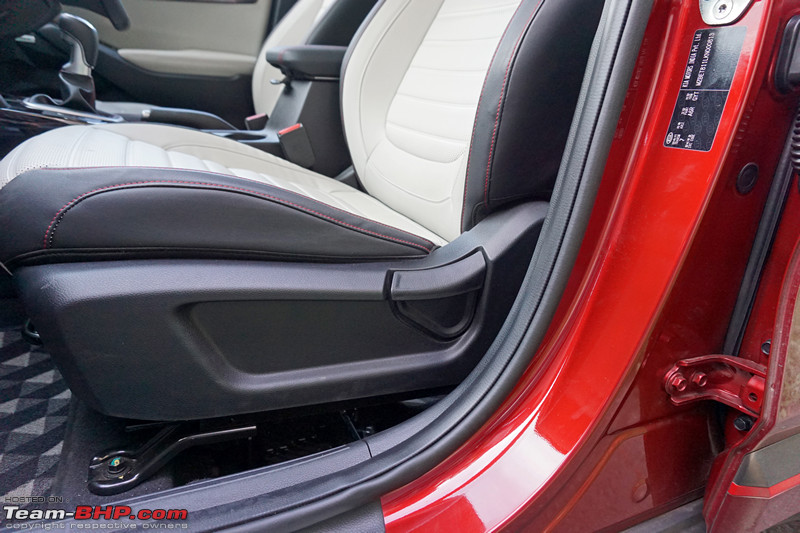
Basic transmission adjustments for your spouse / engagement:
A shut await at the tubular blueprint leather seat upholstery of the GTX+ variant. Perforated cloth is mandatory for the seat's cooling function. The quality of materials used is skilful:
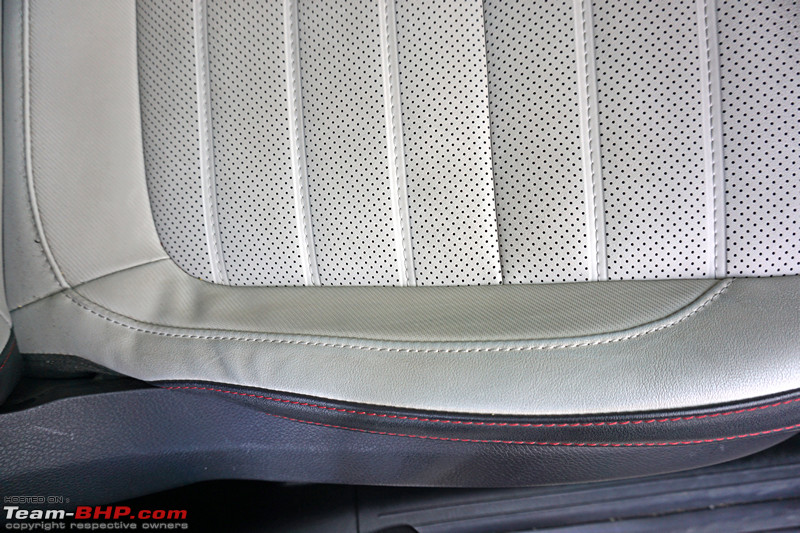
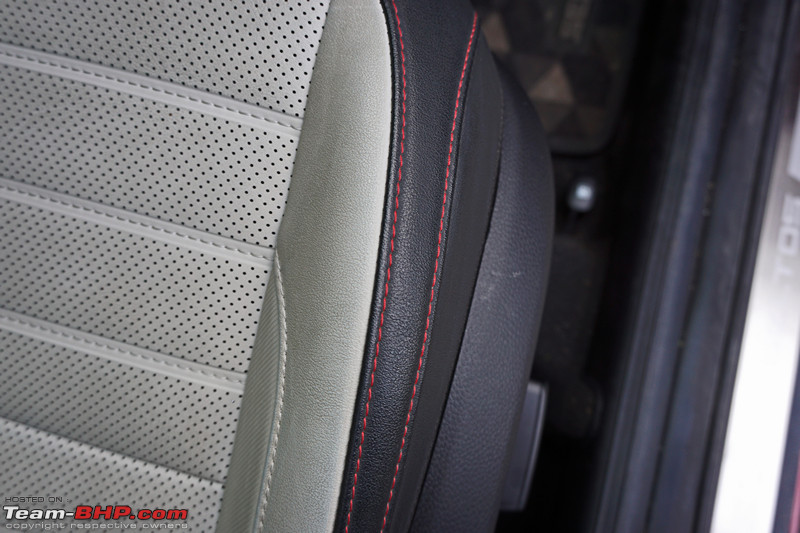
Red dissimilarity stitching on the side looks prissy:
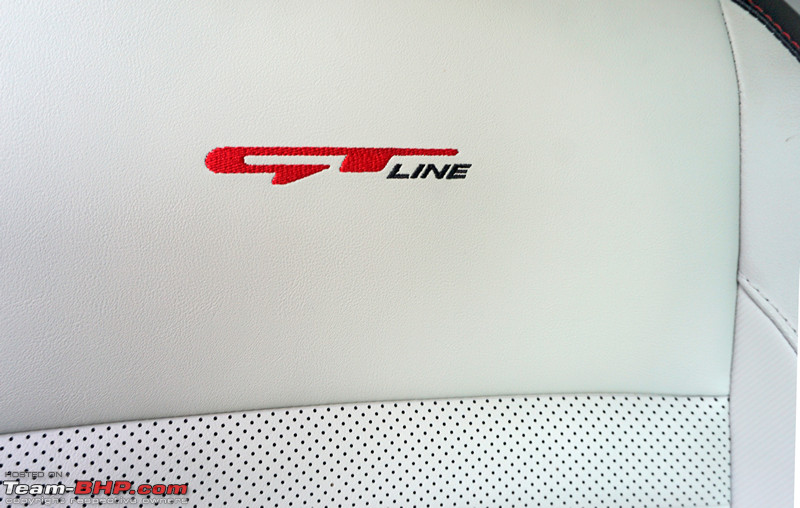
"GT Line" has been embossed on the backrest:
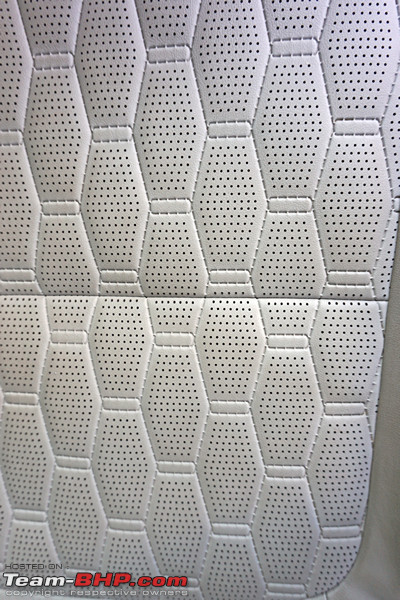
A close look at the honeycomb upholstery design of the HTX and HTX+ variants. Other Tech Line variants get black fabric upholstery:
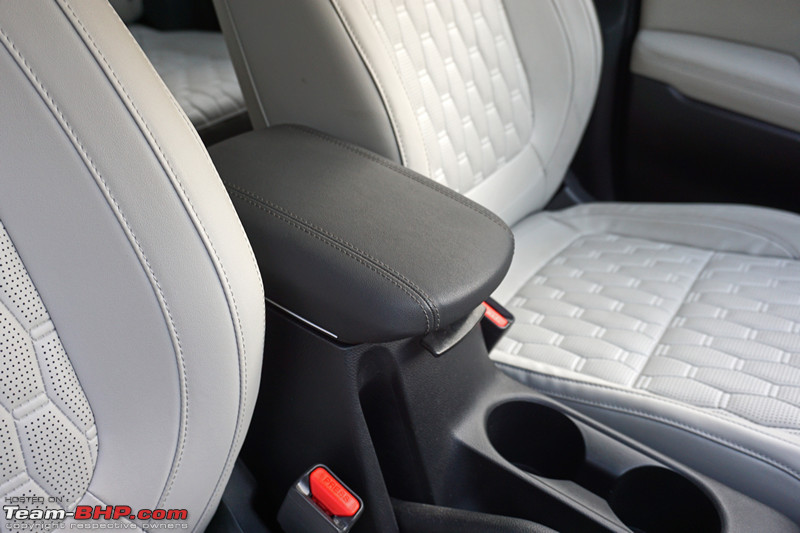
Middle armrest has a soft leather cladding with ruddy stitching. While it is non adaptable, the armrest is conveniently placed and virtually drivers will discover it comfortable to apply. Still, that's no excuse - in a machine likewise-equipped, this of import driver tool should accept been adjustable:
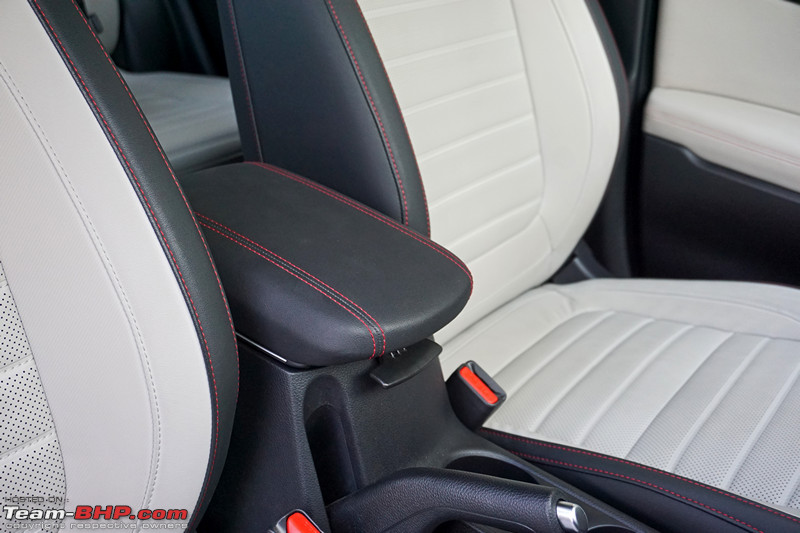
Similar the other parts, the Tech Line's armrest does not go red stitching:
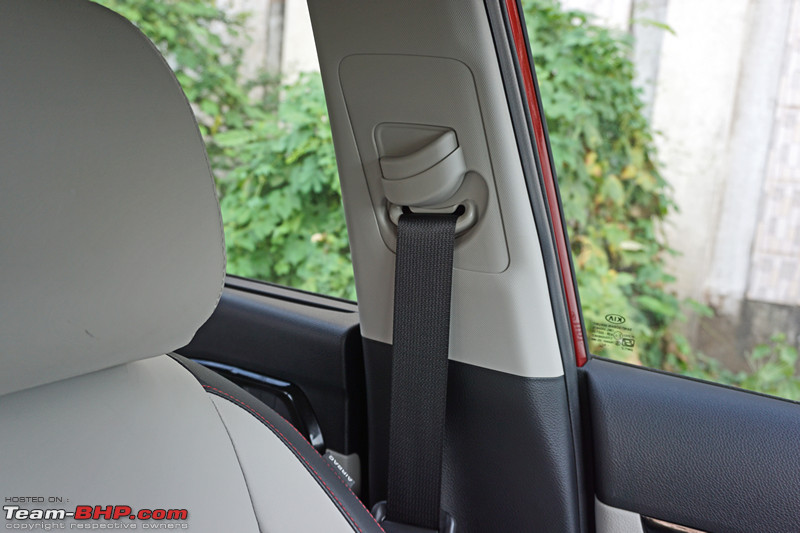
Seatbelts are meridian-adjustable. Both forepart seatbelts get pre-tensioners:
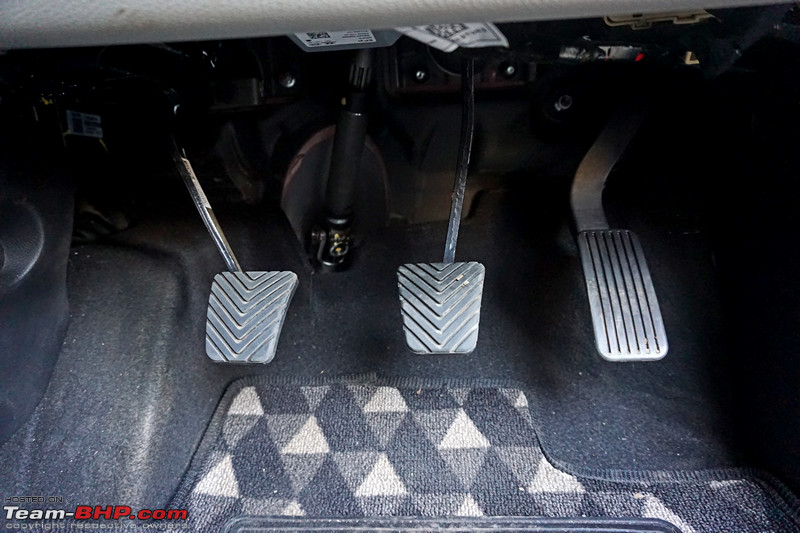
Pedals are properly spaced out. A very usable dead pedal has been provided likewise. While the A, B & C pedals of the GT Line are finished in sporty aluminium with black safe grips...
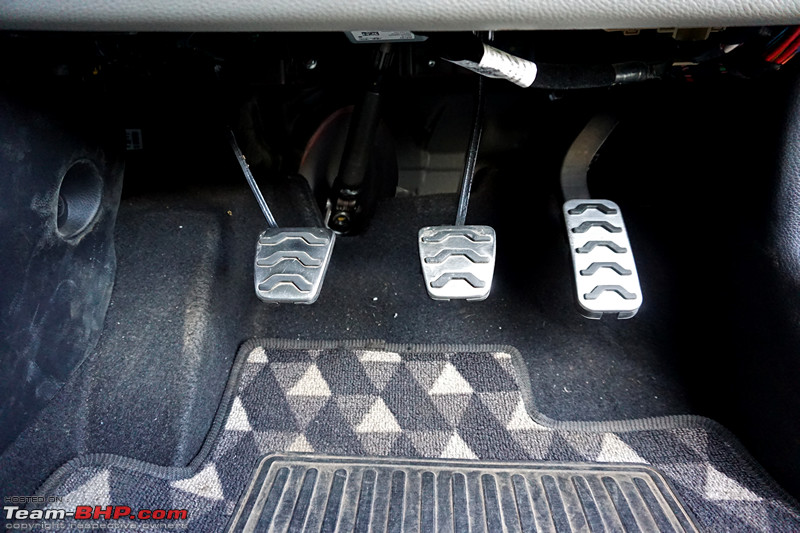
...those of the Tech Line are regular blackness condom grips. The clutch in both, the petrol every bit well as diesel variants, is light but information technology has a longer travel range than we expected:
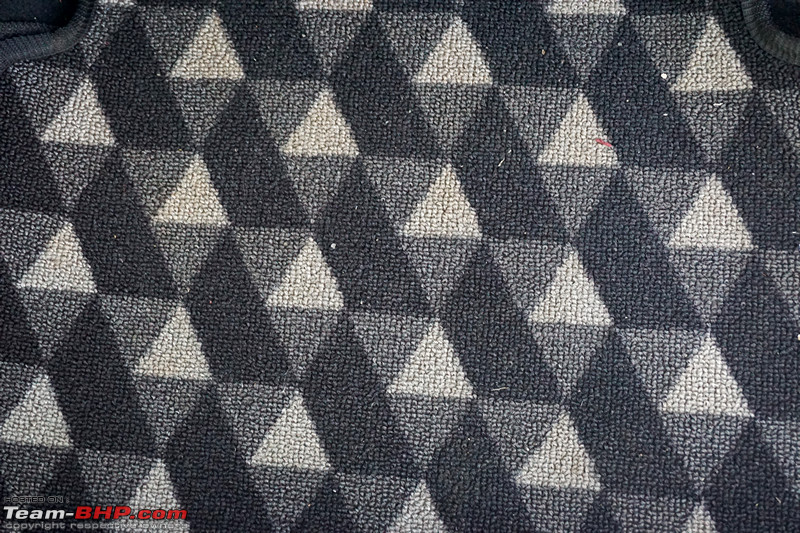
Floor mats have an bonny beige & black design pattern. Looks squeamish, although it will get dirty hands. India isn't a state for beige anywhere on the flooring of cars:
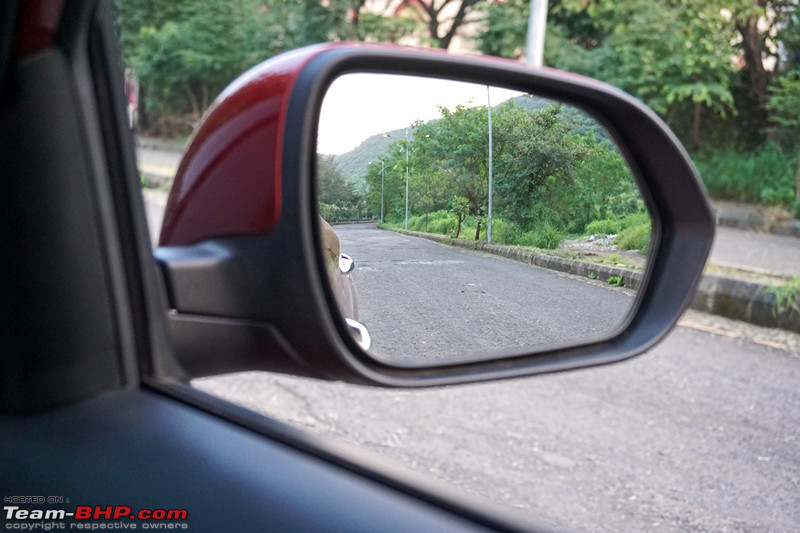
The ORVMs are sufficiently tall and wide, providing a good view of the action backside:
IRVM is very unique and looks upmarket. Information technology is broad enough to cover the unabridged rear windshield. Rear headrests and thick C-pillars restrict visibility though:
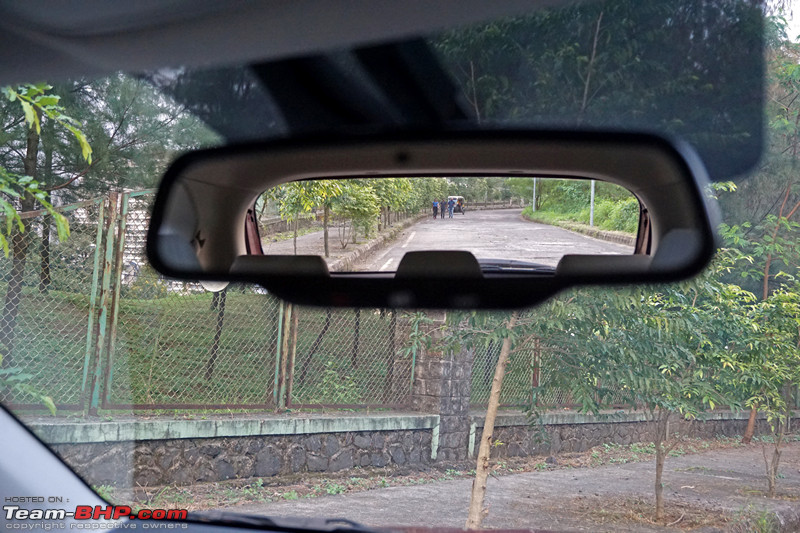
Like we saw in the Hyundai Venue, the IRVM houses 3 buttons - SOS will place an emergency call to Kia customer intendance, the button with the tow truck will call Kia Roadside Help and the third button volition launch UVO (telematics). Car-dimming office has been provided besides:
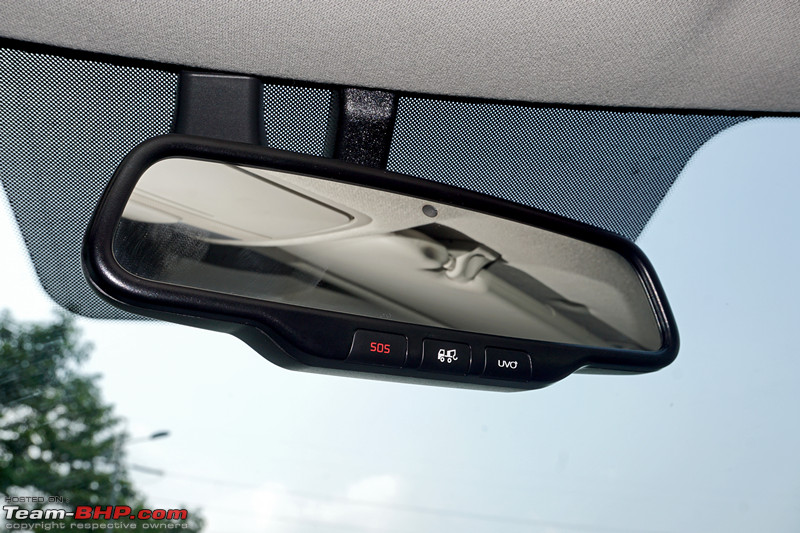
Sensor for the 'automatic headlamps' is located behind the IRVM:

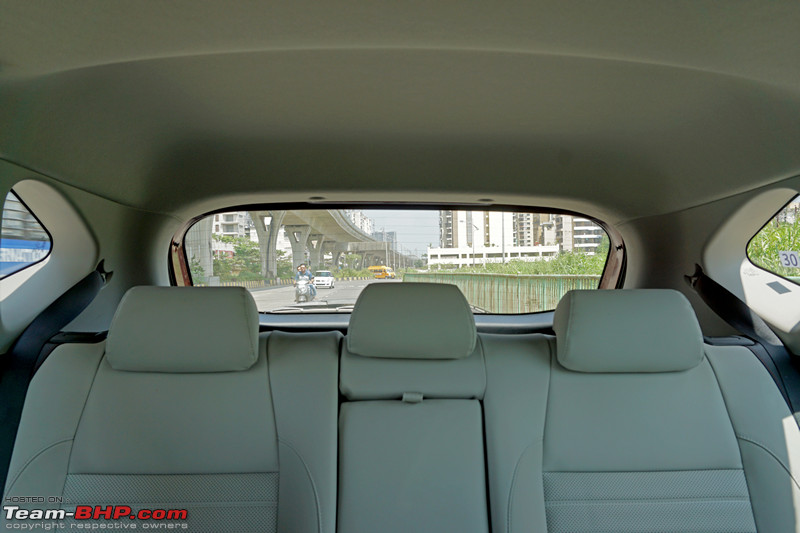
Similar nearly crossovers, the rearward view is average at best. As mentioned earlier, the rear windshield is off-white in size, but the C-pillars are thick. Better to rely on the reversing photographic camera & parking sensors:
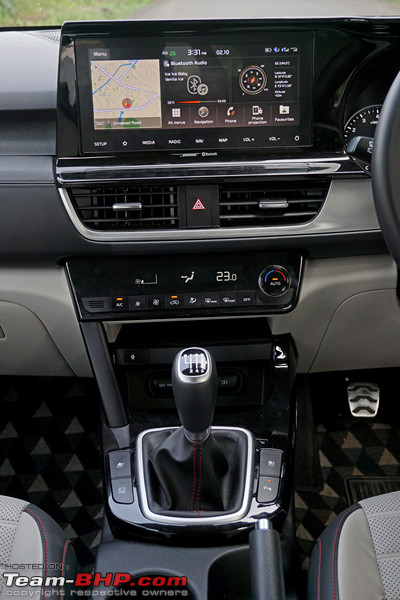
Eye fascia tilts slightly towards the commuter. It features a floating touchscreen head-unit with a piano black cease. A thick argent border runs effectually the sides and nether the air-con vents, every bit well equally the gear lever. The climate command area gets a piano blackness surround too:
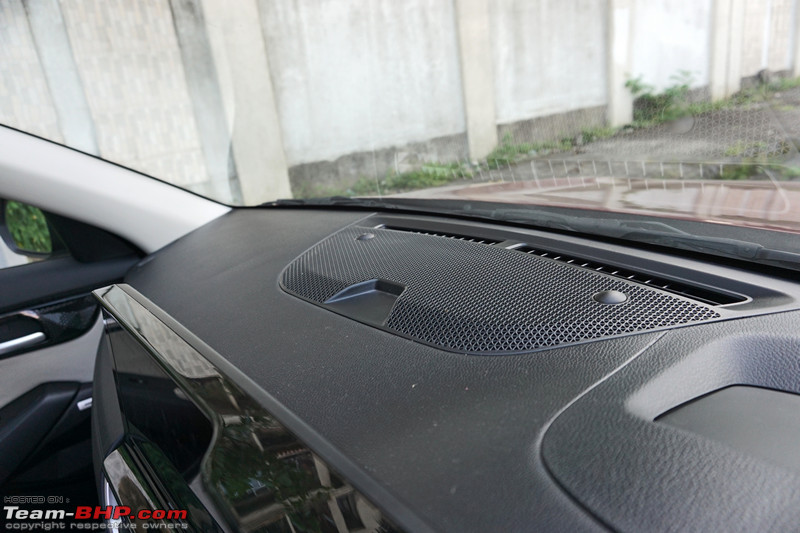
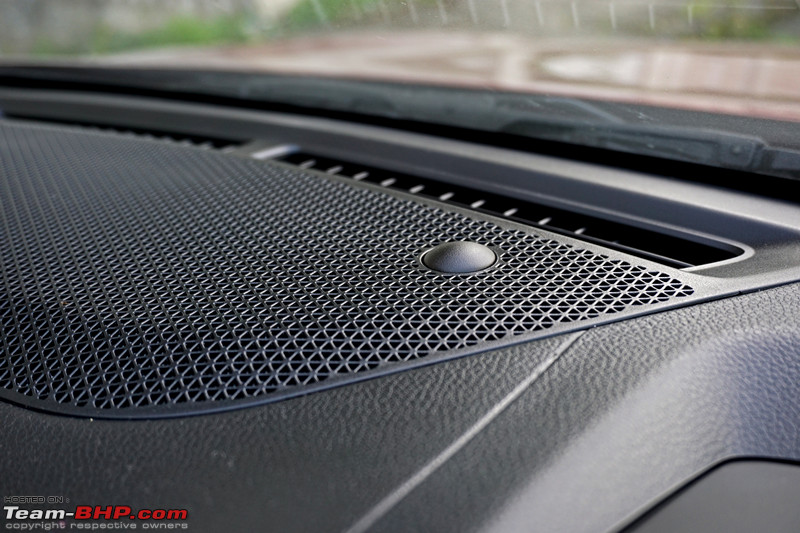
Centre speaker is located on top of the dashboard:
Solar sensor is located on the right:
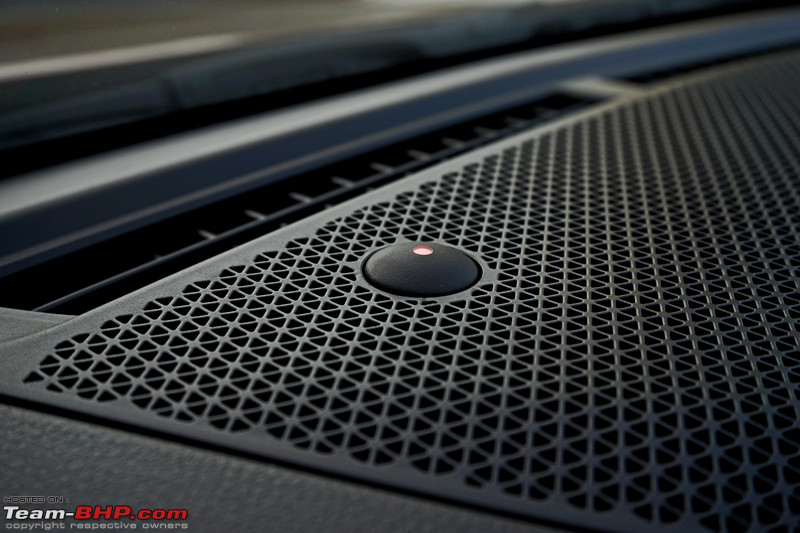
Tiny, red security alert indicator flashes when the auto is locked:
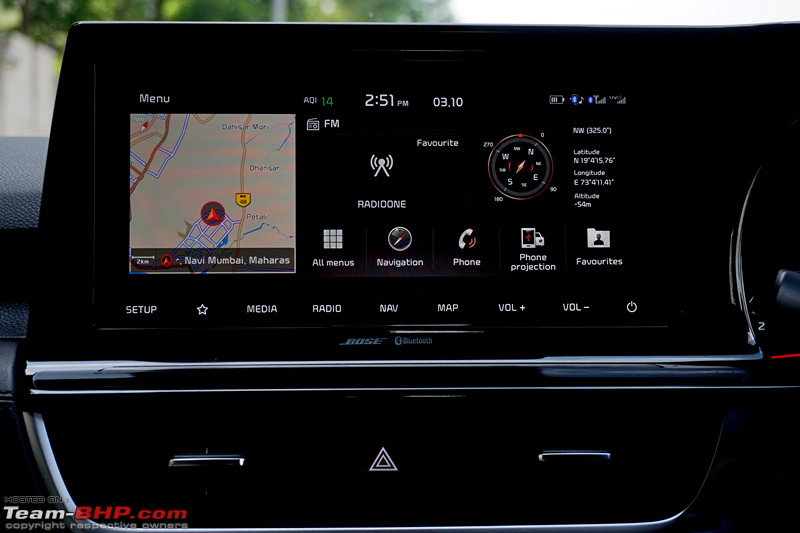
GTX, GTX+, HTX and HTX+ get this tablet-similar ten.25-inch Hd touchscreen head-unit. Its functions are covered in detail in a separate postal service:
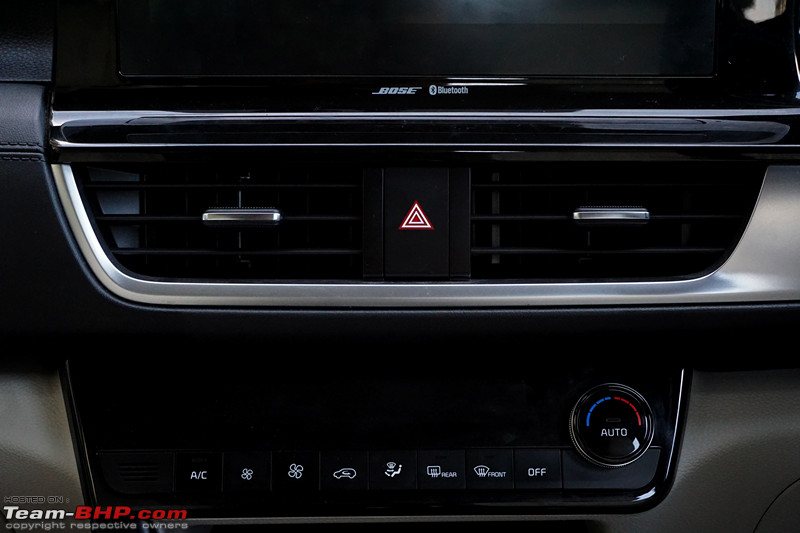
Key air-con vents have a argent edge on the sides and below. While the right vent can exist shut by moving the management controller to the extreme left, it'southward vice versa for the left one:
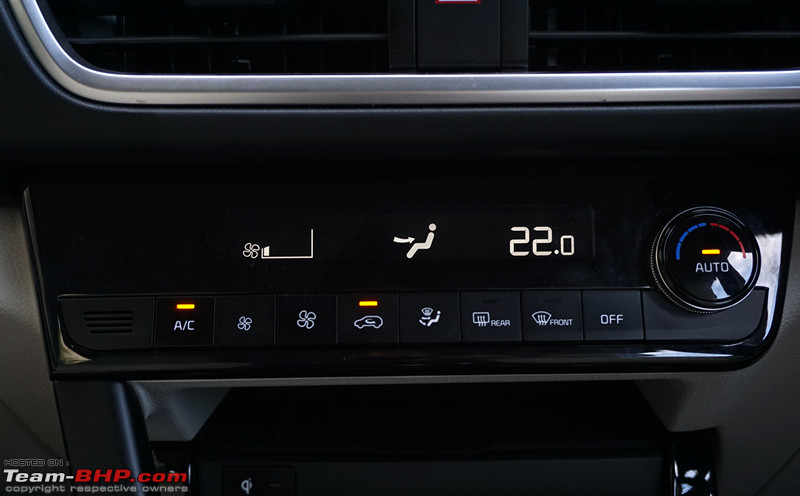
Unproblematic and easy-to-read climate command system gets a shiny blackness border. The blower has 8 levels of adjustment. At levels one and 2, it is silent. At levels three and 4, it gets audible. At levels five and 6, information technology is loud, while on levels 7 and eight - the noise is excessive. The lowest temperature that the system goes to is 17 degrees centigrade before hitting 'LO', while the highest temperature level is 27 before hitting 'HI'. The cooling operation is excellent. The systems on both our early on MT examination cars had bugs. The air-cons randomly stopped cooling at different times without whatever setting being changed. Just the later AT cars that nosotros got had their air-cons working perfectly:
Kia has equipped the Seltos with Eco Coating - a technology that is claimed to eliminate air-conditioner odour. Sounds familiar? Yep, Hyundai uses it as well:
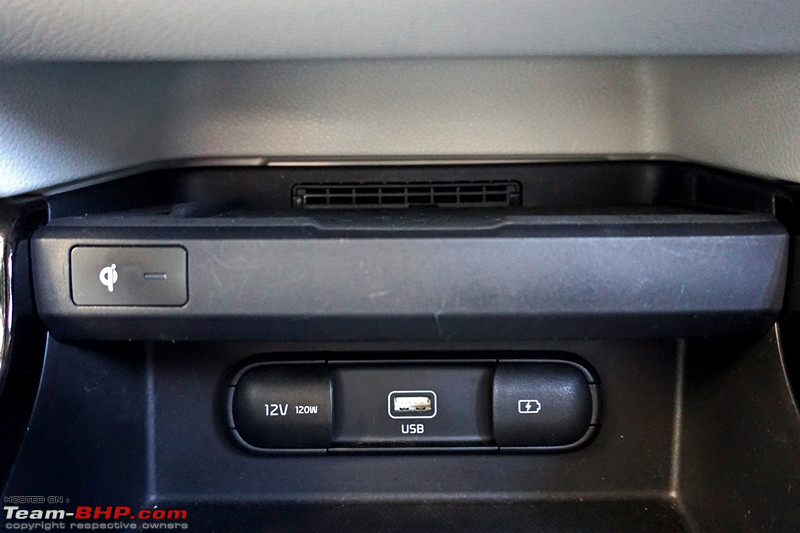
Below the climate control panel is a 10W wireless smartphone charger. Remember, your smartphone needs to have the wireless charging function for this characteristic to piece of work. You should not identify coins or the smartkey here:
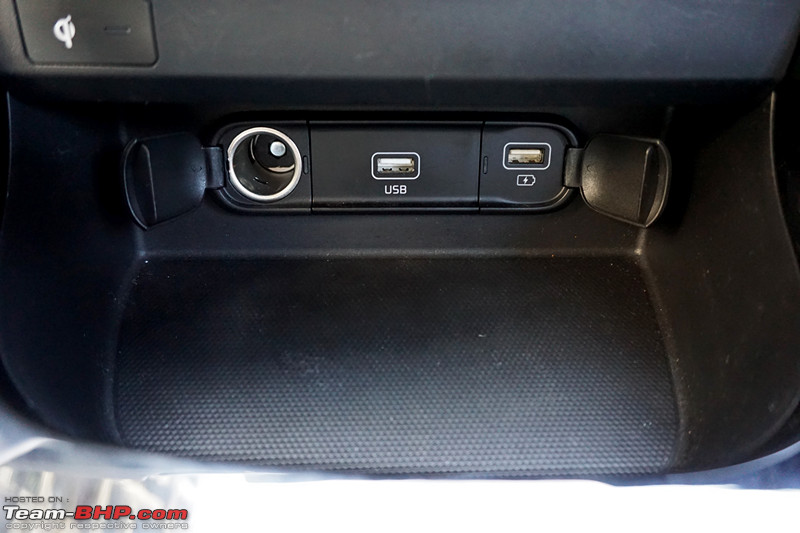
2 USB ports and a 12V power outlet are located at the base of the middle fascia. The USB port on the right can only exist used for charging, while the one in the middle tin be used to connect your smartphone to the infotainment organisation (eastward.g. Android Auto). 12V power outlet and right side USB port get flip-type plastic covers. Nope, there's no Aux-in port. Storage surface area is big plenty to hold a half-dozen" smartphone:
Unmarried grab handle on the left of the centre fascia. For the passenger?
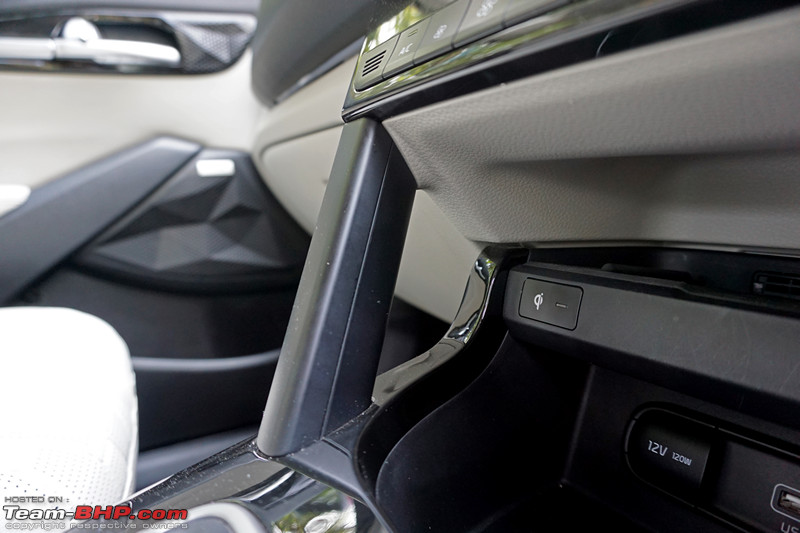
Bird's eye view of the center panel:
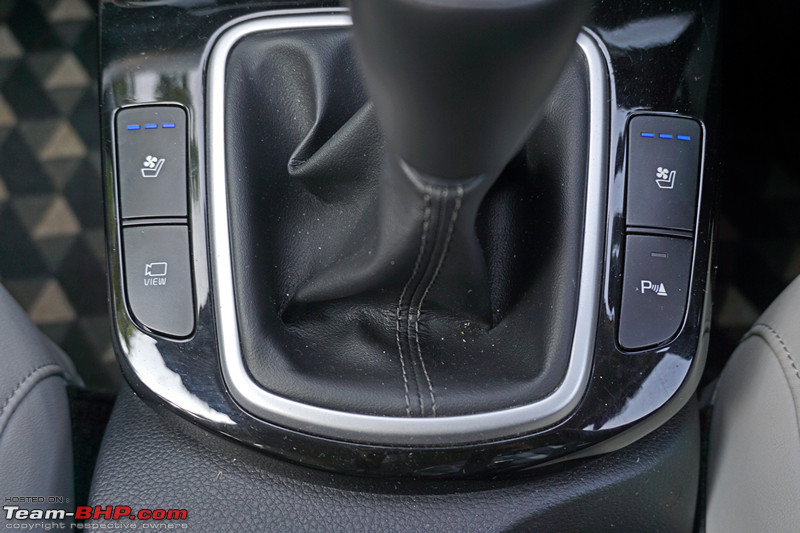
Buttons for the cooled seats are located here. Pressing the push button one time takes the cooling straight to level iii - the highest setting! Pressing it subsequently brings it down to levels 2 & ane, and so off. This characteristic proved extremely useful in the October heat of Mumbai. Buttons to manually activate the 360 caste camera and parking sensor are placed here every bit well:
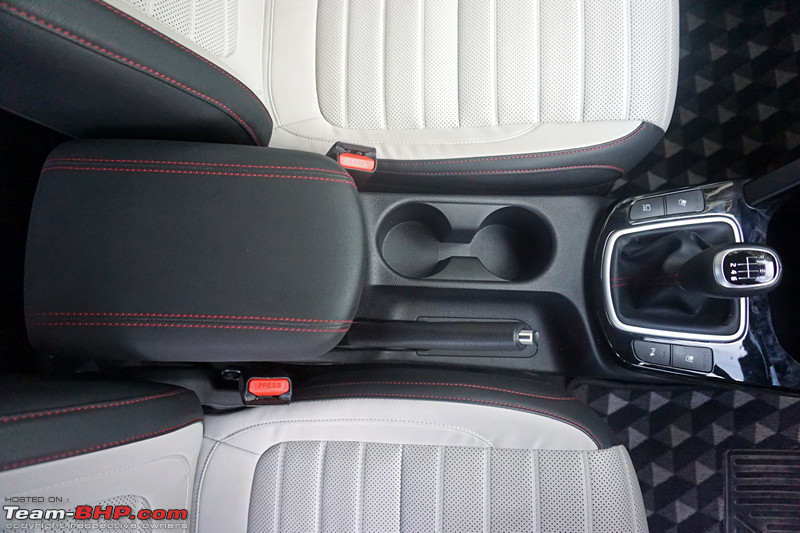
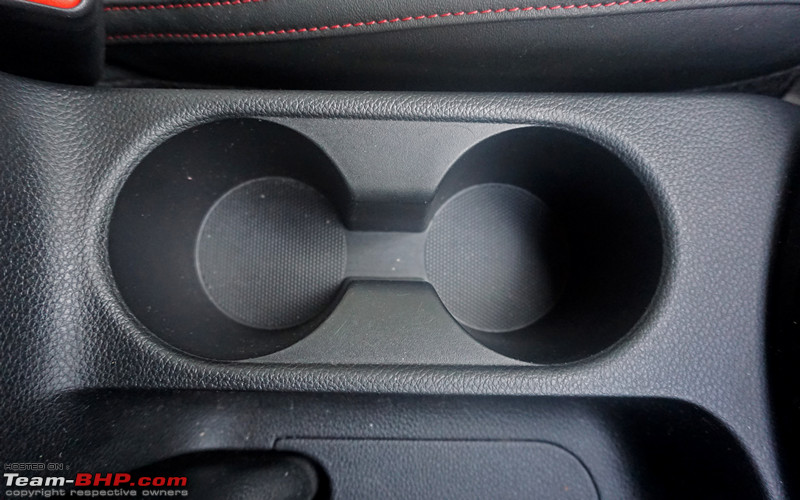
Two cup-holders to the left of the handbrake:
The GTX, GTX+, HTX and HTX+ variants become a cabin air purifier with perfume dispenser, which is placed below the center armrest. This is a first-in-segment feature and tin exist activated through the ICE head-unit of measurement. The air quality index is displayed on the head-unit of measurement equally well as a modest screen behind the heart armrest (for rear seat passengers to encounter):
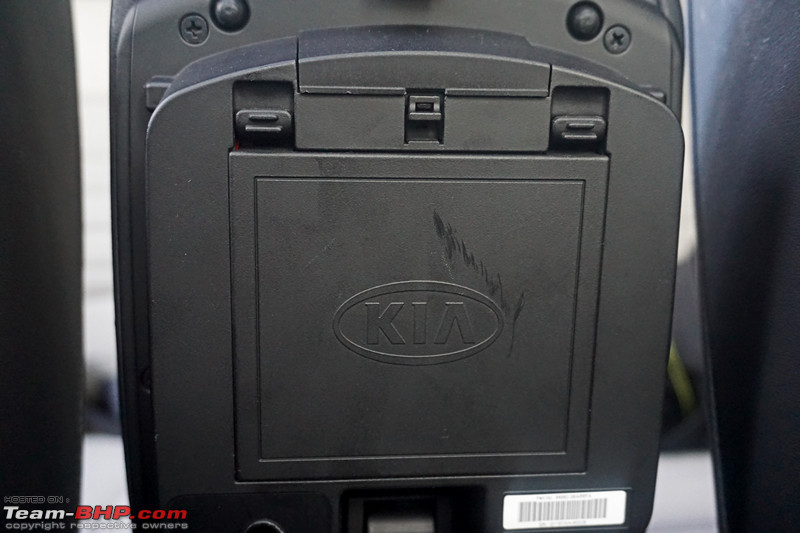
Remove the cover to gain access to the filter:
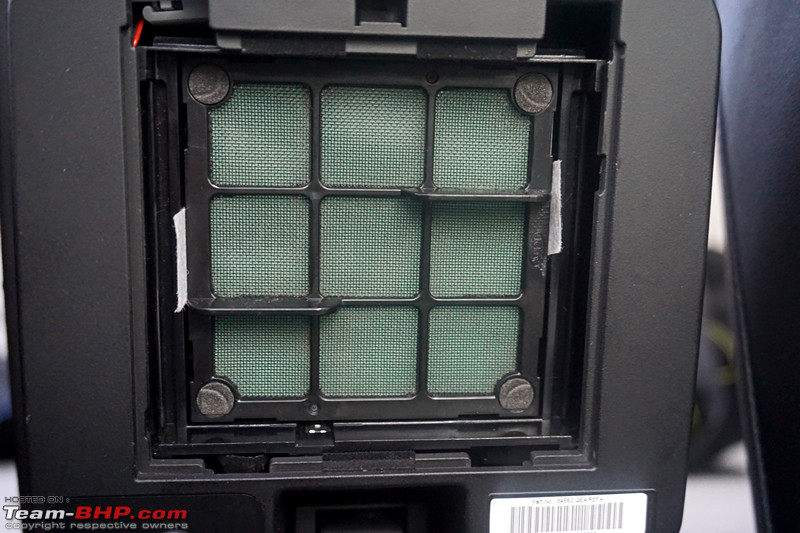
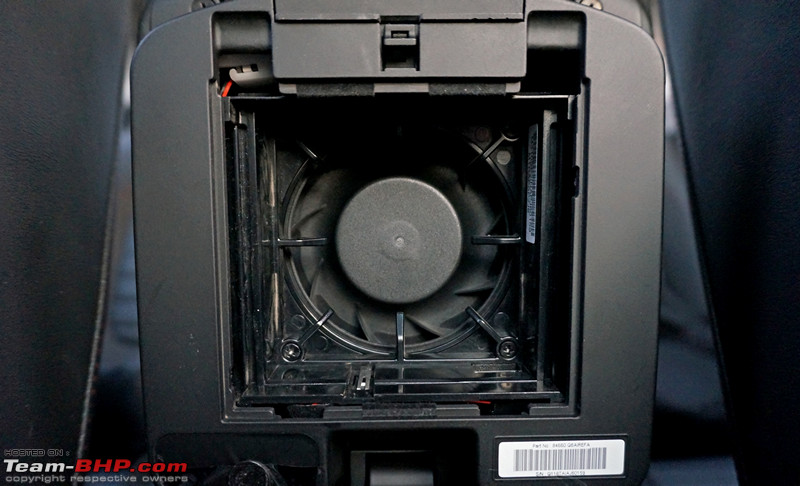
Air is sucked in from the sides of the center armrest, and purified air is then allow out through the front and rear. Fan speed can be altered as well (through the caput-unit). The perfume cartridge is located just alee of the fan:
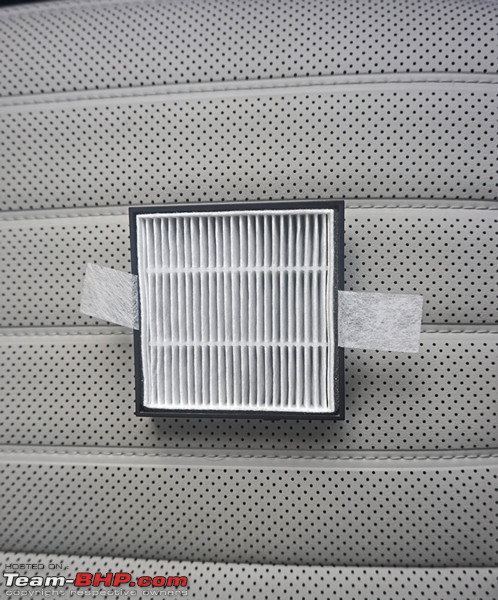
The filter can be removed for cleaning. The infotainment head-unit will tell you (in the number of hours) when you need to clean information technology. If yous desire to know how bad the quality of air is in India, effort this. In Bombay, the AQI display was reading "7" with the windows up. The minute I rolled both the forepart glasses downwardly, it shot upwards to 70 in a infinitesimal!
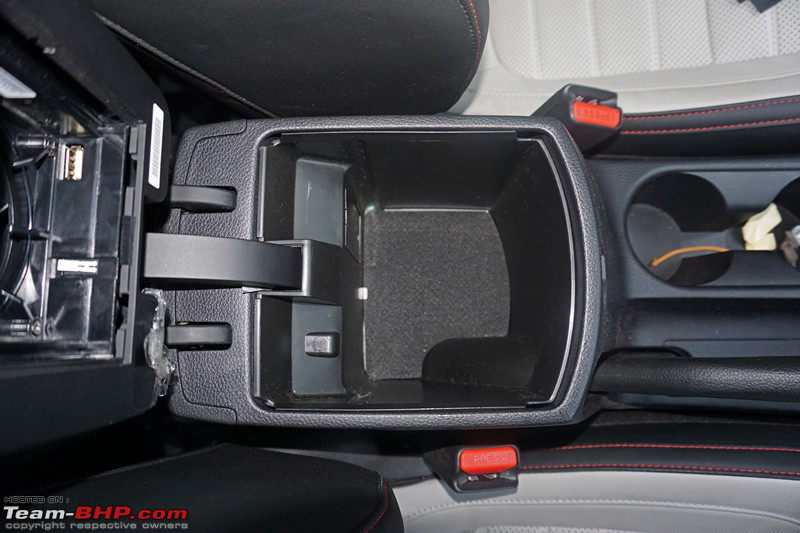
Center armrest has a deep storage compartment underneath. It has a soft lining on the floor:
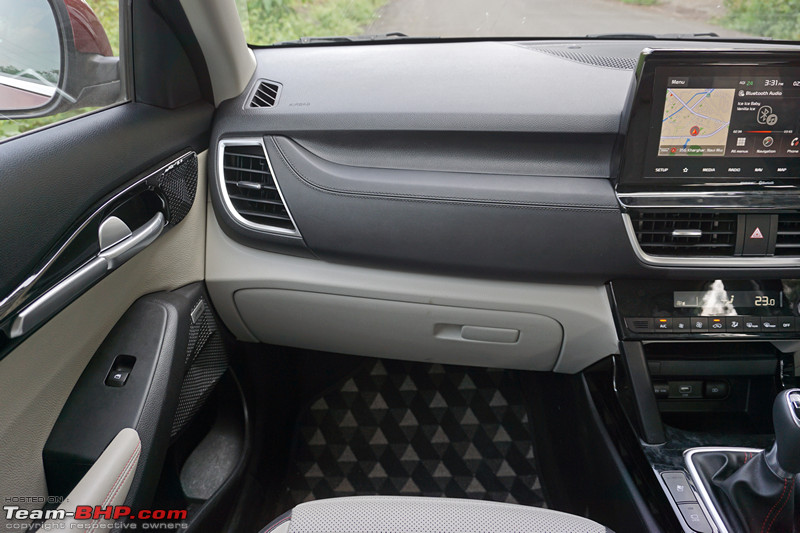
Leather insert above the glovebox is the merely soft cloth used on the dashboard. For once, even in the GT Line, there is no contrast stitching here!
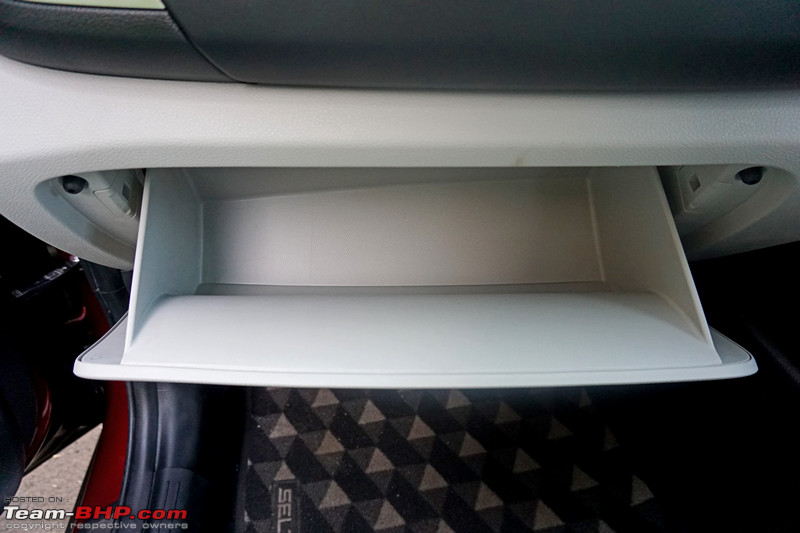
Glovebox is well-sized. No illumination or cooling - features that are expected in a car from this price bracket:
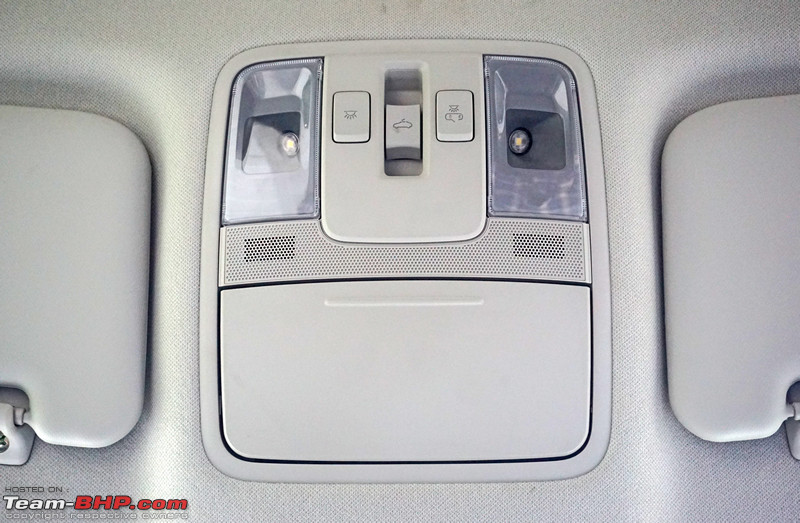
Roof bezel consists of map lights and sunroof controls, Bluetooth mic and sunglass holder. Y'all tin can kickoff the forepart + rear cabin lights from here. After locking the car, all cabin lights become out with a theatre-dimming effect. Even if the motel lights are left in the ON position, they will become off when you lot lock the automobile from outside (to preclude bombardment drain). For obvious reasons, things are very like to Hyundais in here:
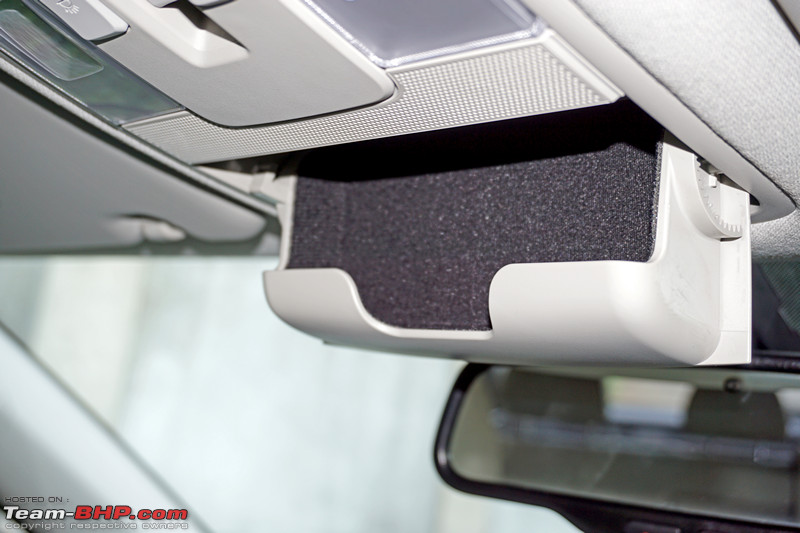
Sunglass holder has a soft opening activity, and a protective lining on the inside to prevent your sunglasses from getting scratched:
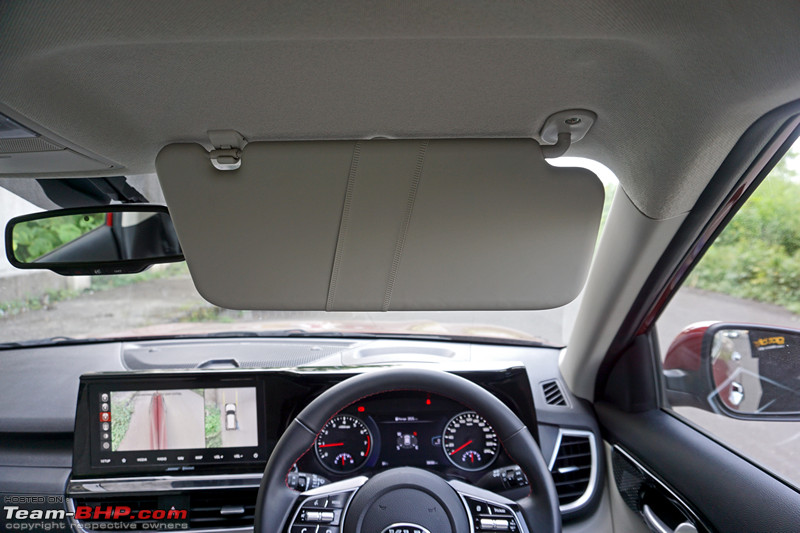
Sunvisors are economic system-grade in pattern, nonetheless they don't feel flimsy. Commuter-side unit only gets a flap to hold tickets (no mirror or illumination):
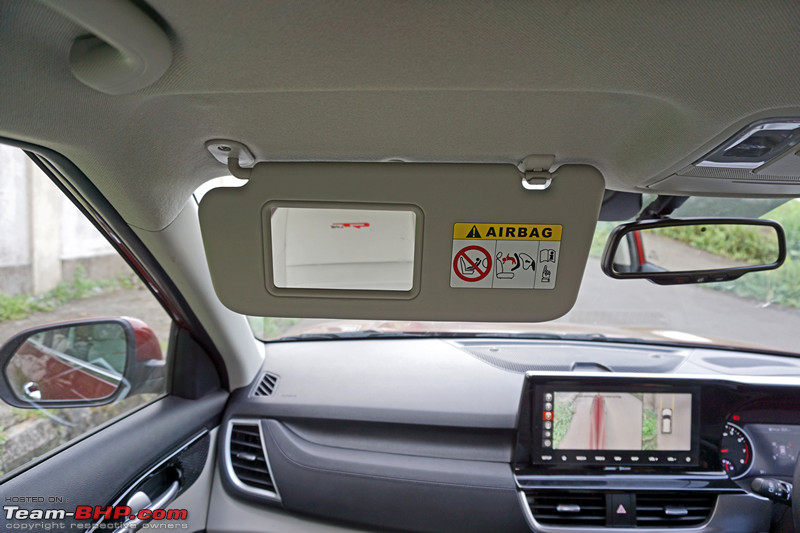
Passenger-side sunvisor gets a vanity mirror, but there's no cover or light provided:
Dual airbags are standard on all variants of the Seltos. GTX+ trim gets 6 airbags in full. These include…
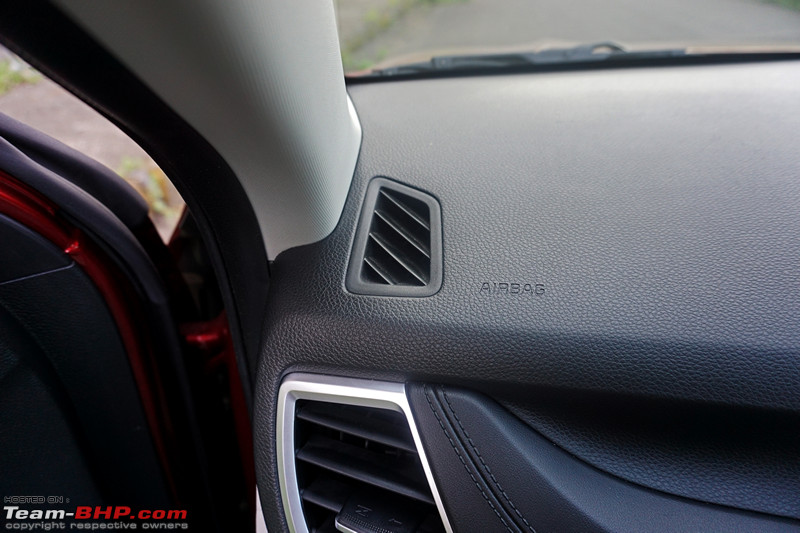
…side airbags (no seat covers here please)…
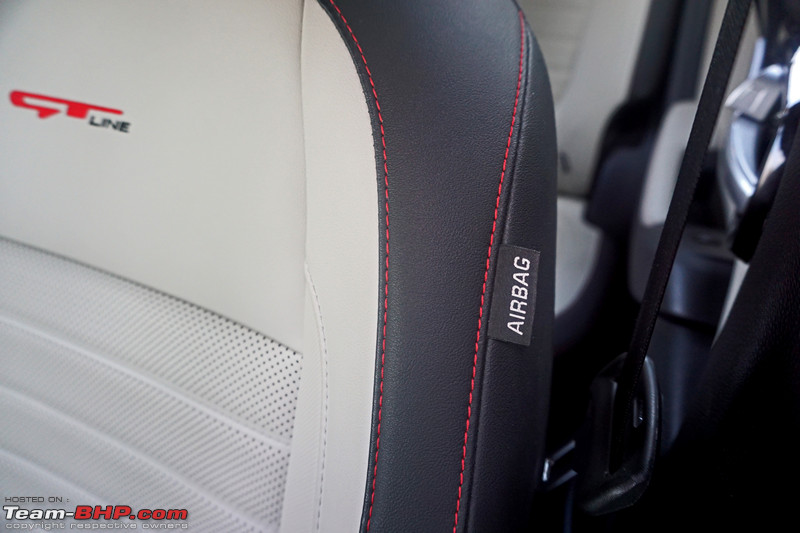
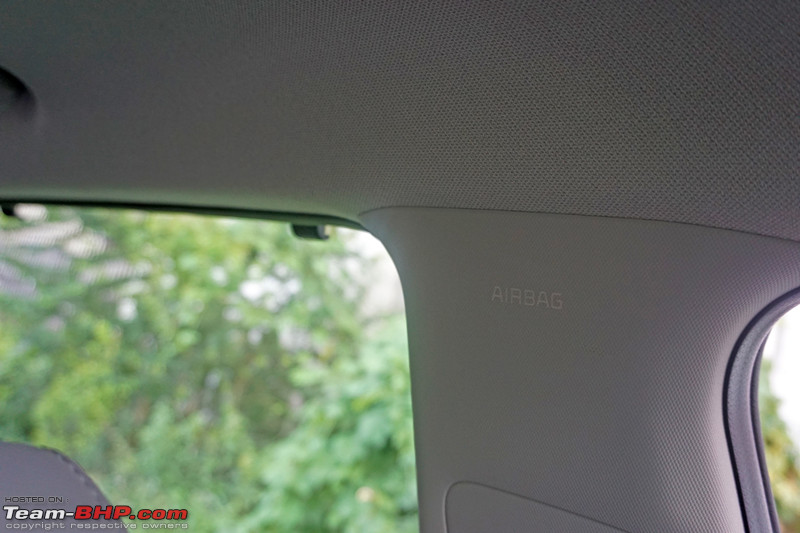
…and curtain airbags:
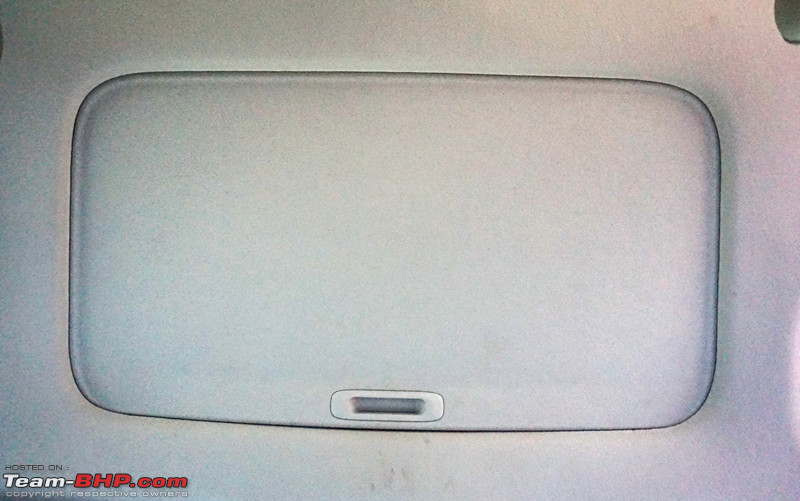
Sunroof cover is manually-operated:
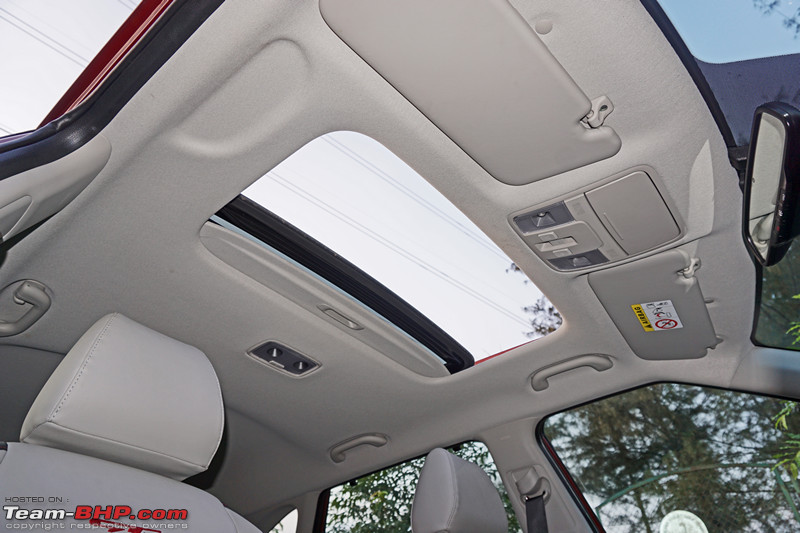
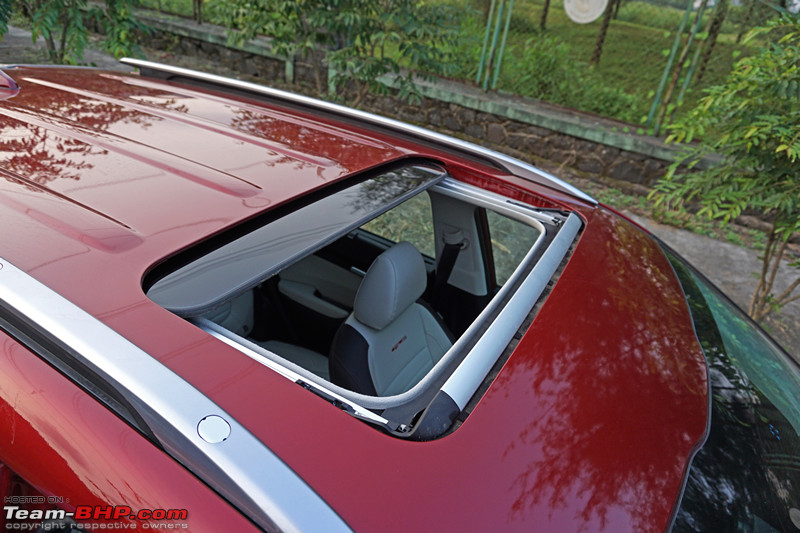
The size of the sunroof is a chip smaller than we'd have liked:
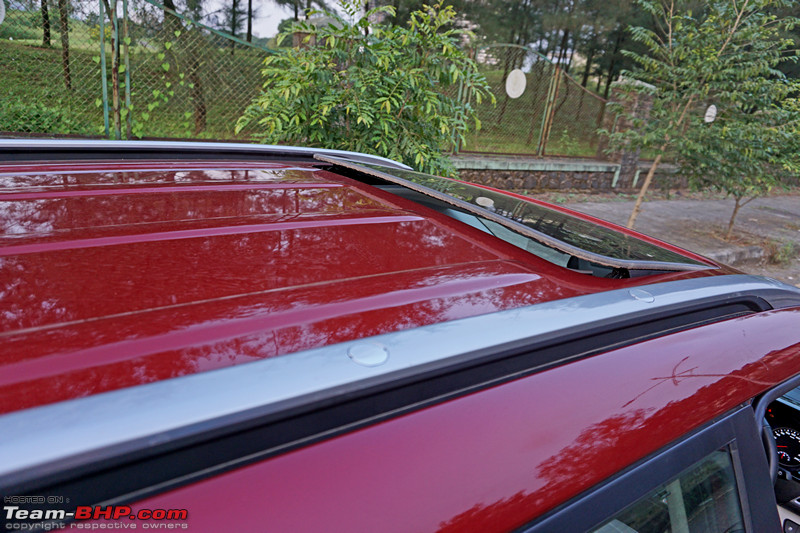
You tin pop it up for ventilation, by pushing the sunroof push up:
With the sunroof (or even its comprehend) open up, a lot of light comes into the cabin. This is the max it opens to:
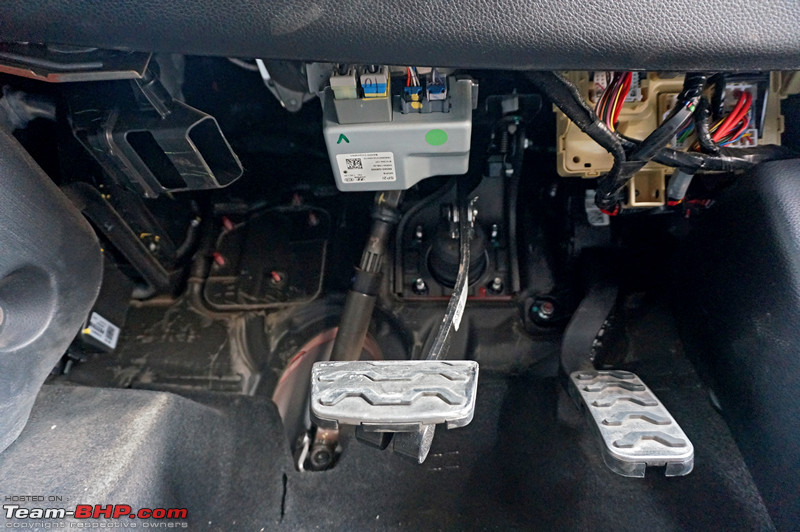
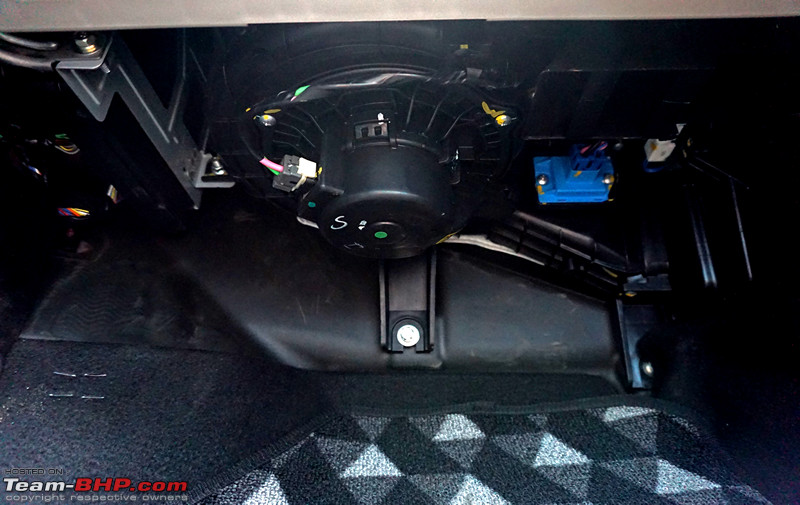
Things are organised even in places where most owners won't look. At that place are no loose wires or cables dangling anywhere. Here'south a look beneath the dashboard in the driver'southward footwell...
...and the passenger's footwell:
Source: https://www.team-bhp.com/forum/official-new-car-reviews/217182-kia-seltos-official-review.html
0 Response to "If You Stall When Parking Do You Need to Turn the Car on Again"
Post a Comment